
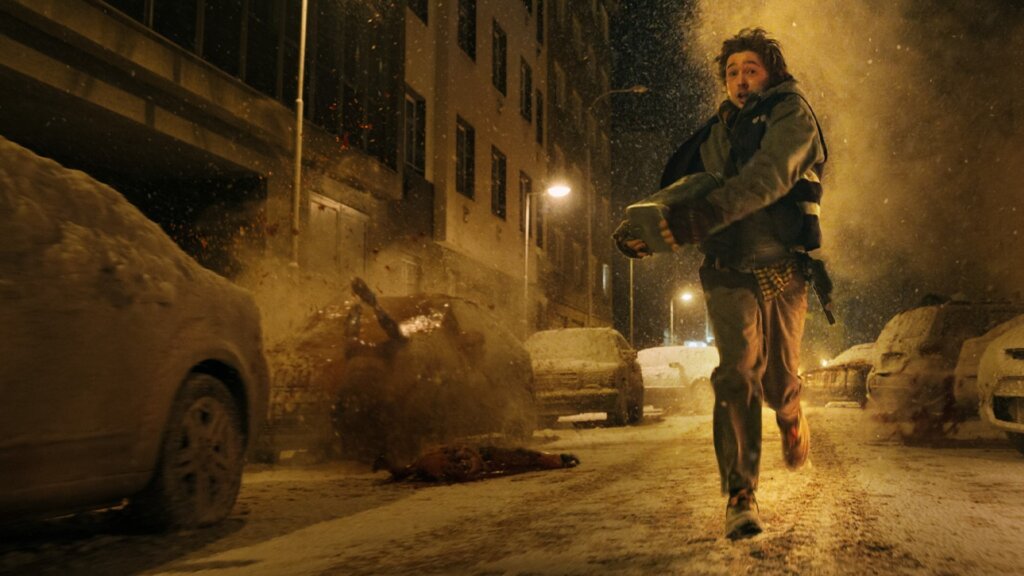
Resident Evil (2026) Review: When the Player Gets Stuck in the Game
I’ve spent enough time with the Resident Evil games to know that the real scares aren’t always about the “monsters.” Sometimes it’s a locked door when you’re down to three bullets, and you’ve already checked every drawer in the room. Zach Cregger’s Resident Evil understands that peculiar mixture of dread and annoyance better than any previous film adaptation. It’s also a funny account of what would happen if an ordinary person had to endure it.
Resident Evil is currently playing in theaters. Check current rental and purchase availability on Amazon when you’re ready to watch at home.
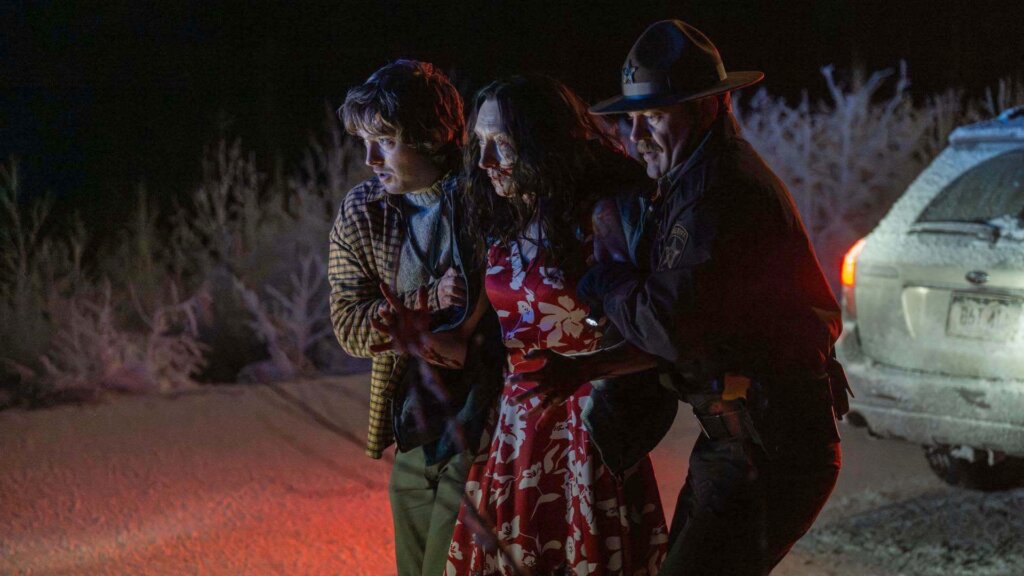
The premise is simple enough: Bryan (Austin Abrams), a medical courier, accepts a late job delivering a package to a remote hospital in Raccoon City. On the snowbound drive, he runs headlong into an injured woman walking in the snow, only to get pulled over by a police officer who’s suspicious of his erratic driving. What looks like one bad roadside emergency turns into a much larger outbreak. With the route ahead turning dangerous and help nowhere to be found, he presses on to a farmhouse and, eventually, Raccoon City. The entire way, he’s determined to deliver the package to its destination at the hospital, but reaching the hospital becomes less a matter of following directions than surviving every detour.
Bryan isn’t Leon Kennedy or Jill Valentine. Not even close. He’s more like a person holding the controller: someone who knows a sensible route ought to exist, but keeps finding it blocked. Cregger builds an original story beside the games’ familiar world, a choice he discussed with PlayStation. That decision gives the film room to play with the experience of Resident Evil instead of staging a hurried reenactment of its best-known plotlines.
For a while, it works wonderfully. The camera slips into first-person POV and settles behind Bryan’s shoulder, recalling both the newer games’ close-up terror and the over-the-shoulder perspective that changed the series. When he approaches an uncertain doorway, I find myself scanning the frame the way I would with a controller in my hands. Cregger allows the space ahead of him to feel like a threat before anything jumps out. And when something does, the film can be frightening.
The references extend far beyond camera angles. Bryan starts with limited weaponry, hunts for ammunition in drawers, has to ration his shots, and encounters the escalating arsenal familiar to players who survive long enough to earn a shotgun. Doors, gates, and other physical obstructions keep sending him in search of another route or a particular key. There’s a conspicuous typewriter, the old games’ way of saving your progress, though it offers a man in an actual outbreak no second chance.
Green Herbs and First-Aid Spray appear as visual nods to the games’ healing items; there’s also familiar-looking ammunition, a mounted shotgun, a valve wheel that’s difficult to turn, and the unmistakable corporate shadow of Umbrella. Even a door-opening shot evokes the early games’ loading screens. Zombies, a dog, and stranger mutations complete the tour. If you’ve ever spent twenty minutes finding the object that opens a door you passed an hour ago, you’ll recognize the film’s sense of humor.
One obstructed escape makes the joke especially clear. Bryan has transportation in sight, but a marked lock on a gate refuses to yield to common sense, force, or the urgency of the situation. As a player, I’ve accepted absurd locks because working around them is part of the pleasure. Watching someone confront the same rule as a physical fact makes it look ridiculous. Why should this gate care that a monster is coming? Why should a few missing bullets determine whether an otherwise capable adult lives? The film takes the artificial inconveniences that make a game tense and asks us to imagine living under them.
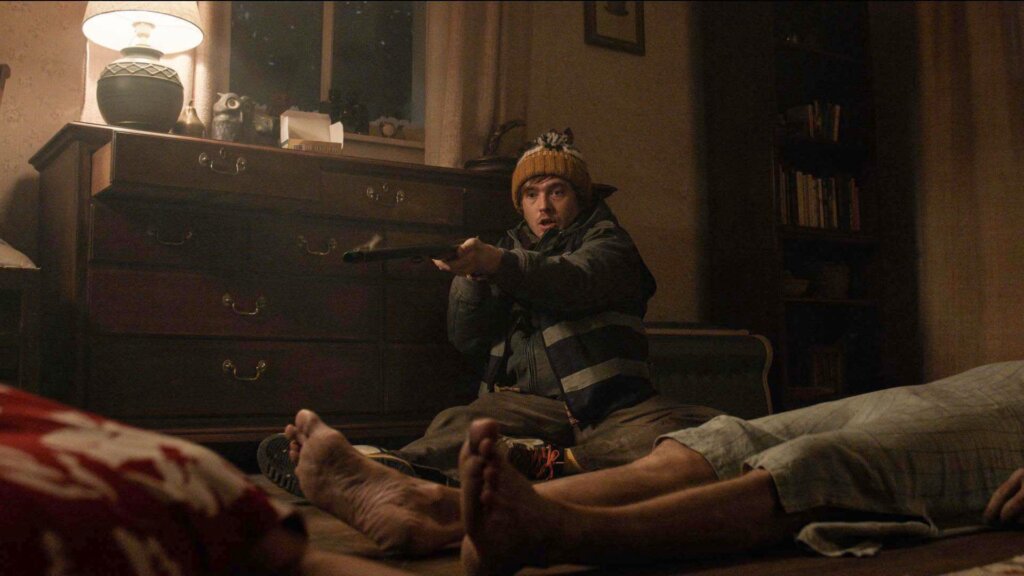
That’s its most interesting idea, though Cregger doesn’t always push it very far. Bryan’s ordeal briefly exposes a difference between how we play a survival-horror game and how we’d behave if a life were actually at stake. Players inspect every container, memorize routes, and take risks because they can reload a save. Bryan has no such assurance. The typewriter sitting there as decoration is a particularly cruel reminder of that missing safety net. I laughed at his predicament, but I also felt the panic underneath the gag.
The comedy shapes the film more than I expected. Abrams is well suited to being overwhelmed without turning Bryan into a fool. His responses give the audience permission to laugh at the escalating absurdity of Raccoon City, even while the film lands a few genuinely nasty scares. Some of the best moments catch me between those reactions: I’m amused by the elaborate difficulty of getting through a space, then suddenly worried that he won’t make it through at all. Compared with the more sustained survival pressure of Sweetheart, this film often releases its tension with a joke. That’s part of its personality, but it sometimes makes the danger feel less real.
I still think this is the best Resident Evil film adaptation by a considerable margin. The earlier films borrowed characters, monsters, and iconography while often drifting toward generic action; Welcome to Raccoon City was enjoyable enough for what it was, but it chased overused locations and story beats.
Cregger seems more interested in the frustrating rhythm that makes the games memorable. His film knows that fear can come from the distance between a locked door and the key you can’t find. That game-first approach gives it a distinctive identity among outbreak movies, even if it lacks the social bite of a film like Train to Busan, or the breakneck terror that still makes 28 Days Later worth rewatching again and again.
The problem is that recognizing a game mechanic isn’t the same thing as developing a story. As the callbacks accumulate, I begin looking forward to the next familiar prop or obstacle more than the next change in Bryan himself. The episodic movement from one dangerous location to another is exciting, but it can also feel like a sequence of levels. The film plainly understands the irritation that gives the games their texture; occasionally it seems satisfied with pointing at that irritation and waiting for us to recognize it.
That weakness grows in the final act. The threats become bigger, the action busier, and the film offers the kind of escalation that a game might reserve for its last boss. I had fun watching it, yet the earlier scenes made me fear what might be hiding behind an ordinary door; the climax asks me to keep up with an increasingly elaborate spectacle. Bryan’s vulnerability, which made both the scares and the jokes work, gets less room to breathe. The ending also leaves enough of its world in play to make further installments easy to imagine. I’d watch one, but I hope a sequel spends as much time building a character and a story as this film spends translating the games’ obstacles.
For all my complaints, I came out very entertained. Resident Evil has real jolts, an excellent grasp of survival-horror gaming, and the inspired comic premise of making a plausible player suffer through the rules we voluntarily enjoy. Its devotion to those rules sometimes crowds out its own narrative, and its final stretch can’t match the ingenuity of the journey there. Still, I’m both pleased to have finally seen an adaptation that feels like playing Resident Evil and left wishing it had trusted its story as much as it trusts the games.
Resident Evil (2026) Film Rating: ★★★½ out of 5
If you’d like to watch Resident Evil (2026), it’s currently in theaters and should be arriving on streaming platforms soon.
Discover more from Philosophy in Film
Subscribe to get the latest posts sent to your email.
