
The Best Offer (2013) Review: A Very Hollow Mystery
Updated September 16, 2026. This review contains major spoilers in its final paragraphs.
Our expectations play a significant role in how we evaluate a film. This may be somewhat unfair to filmmakers, who have little control over our preconceived notions of what their work ought to be. Most viewers know how to temper those expectations, however, and nearly everyone understands the need to suspend disbelief long enough to become engrossed in a story.
In the case of Giuseppe Tornatore’s The Best Offer, several factors led me to believe that my already high expectations might be exceeded. Instead, the film fell far short of them.
Stream, rent, or purchase The Best Offer on Amazon.
First and foremost, Tornatore’s 1988 masterpiece Cinema Paradiso is one of my favorite films of all time. It captures a love and all-consuming passion for cinema that few other films have achieved. I did not expect The Best Offer to be of the same caliber, but I hoped it might possess some of the same emotional and stylistic confidence.
For approximately 30 minutes, that hope seemed justified. The beautiful European locations and carefully arranged interiors establish an intriguing story about art, authenticity, and the value—both monetary and personal—that society places on classical paintings and sculptures. Unfortunately, once the central romance takes over, it becomes apparent that this is simply not a very good film, let alone another masterpiece.
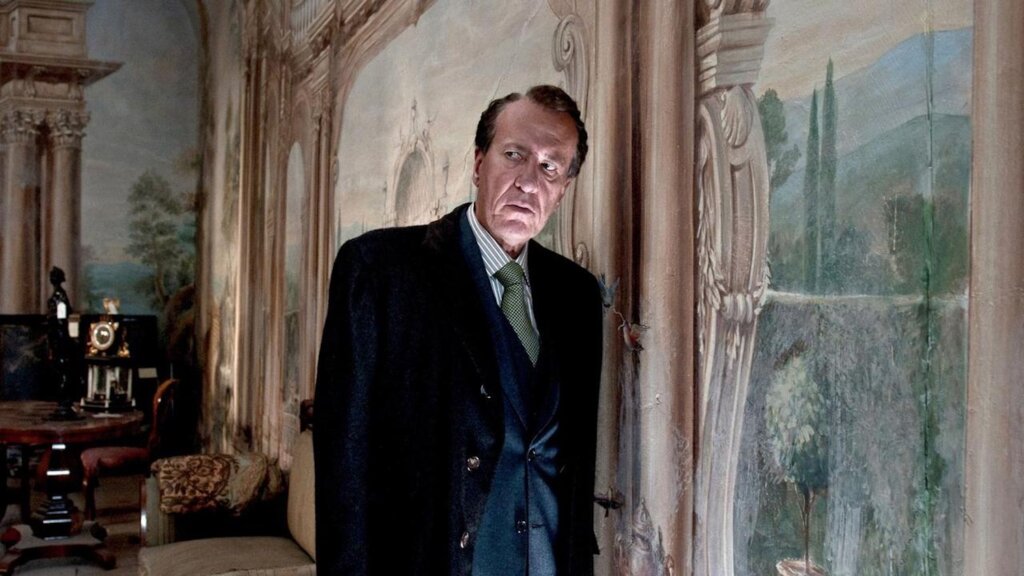
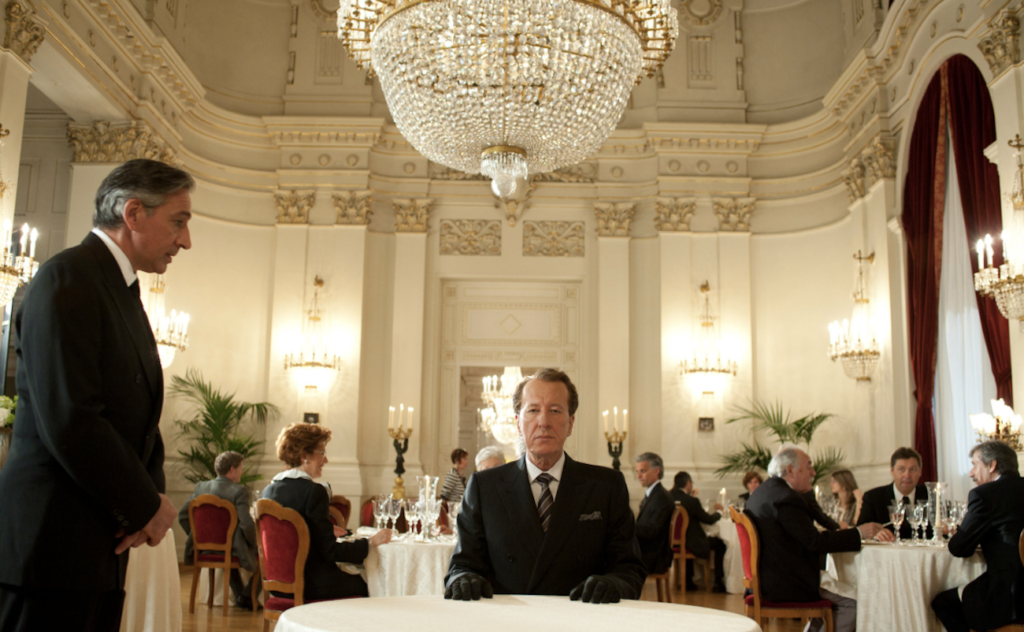
The film centers on Virgil Oldman (Geoffrey Rush), an enigmatic and mildly neurotic art auctioneer, who has established a reputation as the best in the business. He is a germaphobe who wears gloves almost all the time, refuses to own a cell phone, and insists on conducting his appraisals and auctions with the highest degree of professionalism, except when it comes to acquiring special pieces for himself, which he manages to do with the help of his friend, Billy Whistler (Donald Sutherland). One day, a mysterious young woman named Claire (Sylvia Hoeks) hires Virgil to appraise her deceased parents’ collection of antiques. He is apprehensive to do business with her, as she suffers from agoraphobia, and is therefore unable to meet him in person. However, her reclusiveness intrigues Virgil, and through their interactions, he comes to form a bond with Claire, as he can relate to her distaste for the outside world. While working with her, Virgil enlists the expertise of a young craftsman, Robert (Jim Sturgess), to help him reassemble various mechanical antiquities, and also offer him advice regarding his growing feelings for Claire.
Virgil works better as an idea than as a fully realized character. He can determine the authenticity and value of almost any object, yet he has constructed a life in which aesthetic judgment substitutes for human intimacy. His gloves separate him from physical contact, while his secret collection allows him to possess hundreds of female faces without having to know a single woman. His emotional confinement recalls the relationship between repression and physical space in The Piano Teacher, although Tornatore makes the symbolism far more explicit.
In a 2014 interview about the film, Tornatore explained that he was interested in the paradox of a man capable of detecting professional fraud but unable to recognize emotional deception. This is a strong foundation for the story. The problem is that The Best Offer does not trust the audience to recognize it. The gloves, portraits, hidden room, reconstructed automaton, and repeated references to forgery all point toward essentially the same conclusion. What initially appears intricate eventually feels overdesigned.
While the beginning of The Best Offer is promising, the film shows its weaknesses when Claire’s character is introduced, and completely falls apart once Virgil becomes romantically interested in her. This is to say nothing of the many side-narratives, which are all very poorly developed. Perhaps the most interesting plot thread is the ongoing scam between Virgil and Billy, but it is hardly even relevant in the larger story, and not given nearly enough attention from the filmmakers. Regarding the least interesting thread, which is Virgil’s friendship with Robert, the filmmakers abandon all subtlety in order to move the plot along. Robert’s character feels shallow and out of place, acting like the best friend in a trite romantic comedy, rather than a supporting character of a serious drama film. His character takes on greater significance in the final act, but by that point the film has failed in so many different ways that it doesn’t much matter.
One particularly cringeworthy aspect of The Best Offer is its treatment of Claire’s supposed agoraphobia. She frequently behaves less like someone with a debilitating anxiety disorder than a moody teenager whose symptoms fluctuate according to the needs of the romance. The ending retroactively explains these inconsistencies, but it introduces a different problem: mental illness becomes little more than a theatrical disguise. The screenplay has no real interest in agoraphobia beyond its usefulness as a mechanism for keeping Claire hidden. Even the exaggerated psychology of Shrew’s Nest allows the condition to shape physical space, dependency, and daily life more convincingly.
Though the cinematography is quite well done and easy on the eyes, it cannot make up for the poor script. It is not just that The Best Offer is a bland film, which it is, or that it has too many plot threads for its own good, which it does, but that it is greatly undone by the amateurish characterization. Virgil is defined in simple terms, as is Claire and essentially every other person in the film. Rather than the characters defining themselves through their words and actions, the plot and stylistic choices define them for us, spoon-feeding the audience with the low-brow “nuances” of the story world. Everyone and everything in the film is two-dimensional, and there is nothing in them that would be too complex for a child to understand.
The following paragraphs contain major spoilers.
The ending of The Best Offer reveals—or, in Billy’s case, very strongly implies—that Claire, Robert, and Billy participated in an elaborate operation to steal Virgil’s collection. Claire’s agoraphobia was a performance, the villa was rented, and Robert’s friendship was another mechanism for studying Virgil and gaining his confidence. The woman Virgil repeatedly sees in the café is the actual owner of the property, and her ability to remember every movement outside the villa finally destroys Claire’s story.
Virgil’s empty vault provides the punishment the screenplay has been arranging from the beginning. He built the collection by deliberately undervaluing authentic paintings and using Billy to purchase them cheaply. Having exploited his reputation to deceive other owners, he cannot report the theft without exposing his own fraud. He is eventually destroyed by people who understand the same principle he has used throughout his professional life: value belongs to whoever controls the appraisal.
The restored automaton remains behind and repeats the idea that every forgery contains something authentic. Claire’s love may therefore have possessed some genuine emotion even if the relationship surrounding it was fabricated. Tornatore has said that Virgil travels to the Prague restaurant because he continues waiting for her out of love rather than revenge. That interpretation gives the ending a trace of sadness, but it also exposes the film’s central weakness. Rather than allowing authenticity and deception to remain productively entangled, the screenplay reduces the idea to a slogan delivered by a machine.
Virgil’s decision to wait for Claire could have complicated his relationship with reality. Instead, it merely confirms that he remains trapped inside the fantasy. The ending of Shutter Island uses a final decision to reopen questions about guilt, knowledge, and self-deception. The Best Offer uses its conclusion primarily to verify clues the audience has already been given. The machinery is elaborate, but its destination is obvious.
Ultimately, The Best Offer is a poor film with high aspirations; it strives in its tone to be intellectual, and of equal value to the great works of art that Virgil deals in, but in the end, it is just an implausible and ultimately unsuccessful attempt to blend mainstream cinema with high-art.
The Best Offer (2013) Rating: ★★ out of 5
If you’d like to watch The Best Offer (2013), check its current streaming, rental, or purchase options on Amazon.
Discover more from Philosophy in Film
Subscribe to get the latest posts sent to your email.
