
Creep (2004) Review: A London Underground Horror That Loses Its Nerve
This review was originally published on April 9th, 2017. It was substantially updated on September 9th, 2026.
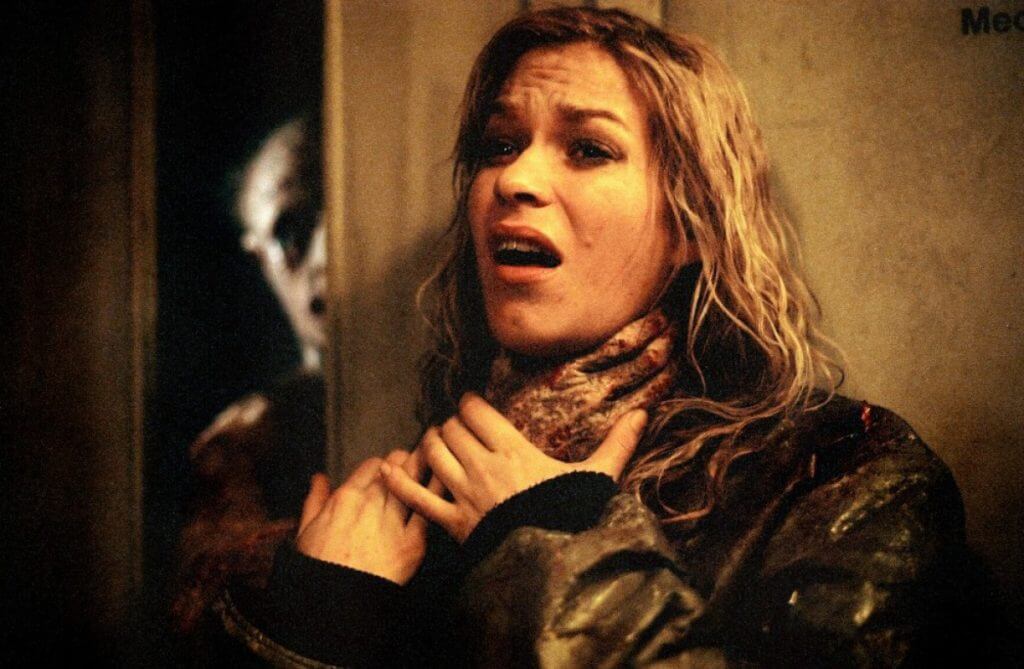
Christopher Smith’s Creep (2004) has a premise I should have liked much more than I did. Franka Potente plays Kate, a young woman who falls asleep in the London Underground after a night out and wakes to find herself locked inside. An empty train appears, the lights go out, and the tunnels beneath the city become a maze with something moving through them.
That is an excellent beginning for a London Underground horror film. The setting is immediately unsettling because it takes a familiar public space and removes the people, noise, and routine that would otherwise make it feel safe. Creep understands this atmosphere from the start. Its problem is that it eventually stops trusting it.
Stream, rent, or purchase Creep on Amazon.
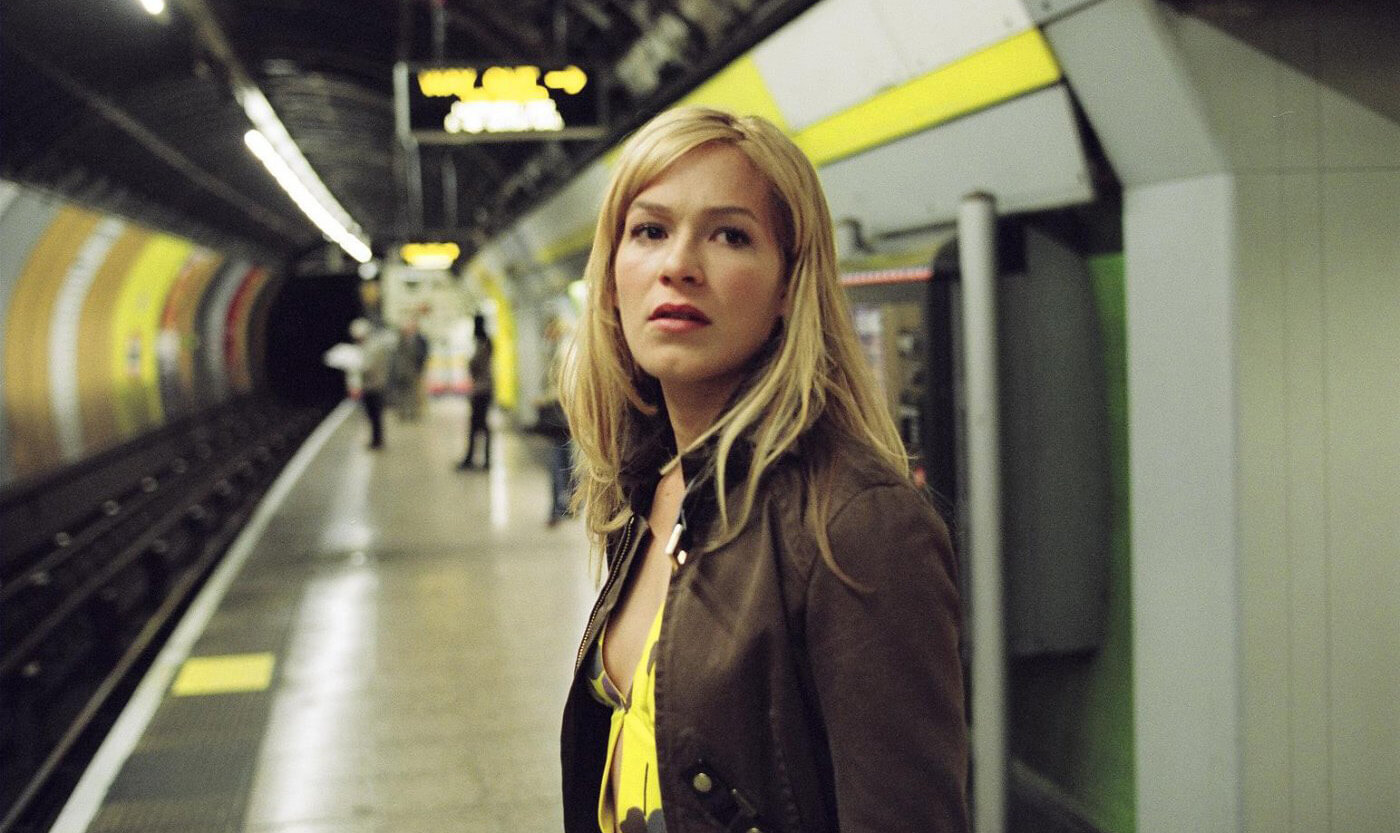
Written and directed by Smith, Creep stars Potente alongside Sean Harris as the creature stalking the tunnels. The film has a strong visual identity, helped by Danny Cohen’s cinematography. Its blue-green fluorescent light, shadowy maintenance corridors, and empty platforms make the Underground feel less like a transit system than a forgotten space beneath London. I kept wishing the film would remain there: trapped with Kate, uncertain about what is watching her, and willing to let the setting do most of the work.
The early scenes are tense partly because the threat seems human before it becomes monstrous. Kate’s encounter with Guy, a man from the party who follows and attacks her, is disturbing precisely because it doesn’t require a supernatural explanation. For a brief stretch, the film makes the title feel deliberately unstable. The “creep” could be the man who believes he is entitled to Kate’s body, the unseen force that intervenes, or the entire environment that leaves her without help.
That is one of the more interesting ideas in Creep, even if the screenplay never fully develops it. The threat of sexual violence changes how Kate and the audience interpret every later encounter. Once Guy has made the danger personal, the empty station feels actively hostile. The film uses this anxiety effectively at first, but it soon treats it as a false start rather than a theme with consequences.
Kate is also a frustrating protagonist. Potente is capable of carrying a film—her work in Run Lola Run proves that—but she is not given enough here to make Kate feel like more than a series of reactions. The script establishes her as abrasive and status-conscious, then largely abandons those qualities once the chase begins. I didn’t need her to be especially likable, but I wanted to understand what the night was changing in her. Instead, the character becomes less specific as the film becomes more violent.
The Underground setting is still the main reason to watch Creep. It belongs to the same broad tradition of subterranean horror as The Tunnel, another film that recognizes how quickly abandoned tunnels can turn into a nightmare. Smith’s film is much more polished visually. Its lighting and production design give even familiar chases a grimy, theatrical quality, and the sense of distance between one platform and the next makes escape feel nearly impossible.

Unfortunately, the creature gradually drains that atmosphere of its power. The first glimpses of Harris are effective because they are brief, badly lit, and difficult to interpret. Once Creep starts treating the monster as a central character, however, the mystery disappears. We see too much of him, learn just enough about his origins to expect an explanation, and then receive too little for the backstory to be meaningful.
Showing a monster is not automatically a mistake; just look at Sweetheart, which shows the monster a lot, but only after the dread has been established. Horror films often need to reveal the thing they have been withholding. The problem is that Creep reveals its creature without giving the audience a stronger source of dread in return. The monster becomes physically familiar before the film has built a compelling mythology or emotional logic around him. What should feel like an escalation instead feels like a reduction: a frightening possibility becomes a man in makeup wandering through tunnels.
That contrast is especially noticeable beside a film like Caveat, which understands that a horror image becomes more disturbing when the film keeps part of its meaning out of reach. Oddity likewise gives its central figure a clear visual function before asking the audience to understand everything behind it. Creep does the opposite. It provides fragments of explanation without deciding what they add to the monster, the setting, or Kate’s struggle to survive.
The film’s growing reliance on gore does not solve the problem. Creep arrived during a period when horror was becoming more comfortable with bodily brutality, and several scenes are undeniably nasty. Gore can be useful when it intensifies an already frightening situation. Here, it often feels like a substitute for the suspense the first act had already established. Once the creature is fully visible and the plot begins relying on increasingly convenient decisions, the shocks lose much of their force.
I don’t think Creep is a worthless film. Its atmosphere is frequently excellent, its London Underground location is genuinely inspired, and Harris is unnerving (for a while). There is a leaner and more frightening version of this story inside the finished film—one that lets Kate stay at the center, treats the creature as an intrusion rather than a co-star, and trusts the dread of an empty station after midnight.
Instead, Creep spends too much time explaining the wrong things and showing too much of the one thing that should have remained uncertain. I came away remembering the flickering lights, the platforms, and the long corridors more vividly than almost any of the film’s plot.
Creep (2004) Rating: ★★ out of 5
If you’d like to watch Creep (2004), it is currently available to stream, rent, or purchase via Amazon.
Source
German Film Institute. (n.d.). Creep. Filmportal.de.
Discover more from Philosophy in Film
Subscribe to get the latest posts sent to your email.

Sounds like fairly standard horror fare. Might check it out. Thanks for sharing.