Hope (2026) Review: Every Reveal Makes It Worse
I was bored for much of Hope, but there was a short stretch when I thought it might turn things around. After about thirty minutes of watching inept people behave ineptly, the monster finally appears, the people panic, and the film becomes exciting enough to make its slow opening forgivable. Unfortunately, that burst of energy is followed by repetitive chases and explanations that make the creatures less interesting every time we see them. By the end, I was wondering how a film with so much gore and violence could feel like such a slog.
Stream, rent, or purchase Hope on Amazon.
Spoiler warning: This review discusses major revelations and the ending of Hope.
To give some context, I wasn’t a huge fan of Na Hong-jin’s The Wailing, either. Its pacing and peculiar narrative structure kept me from sharing the enthusiasm that so many people had for it. Still, it built an atmosphere worth getting lost in and a mystery that gave me some reason to continue. Hope made me appreciate those qualities much more. Whatever my problems with his earlier film, it was far superior to this one.
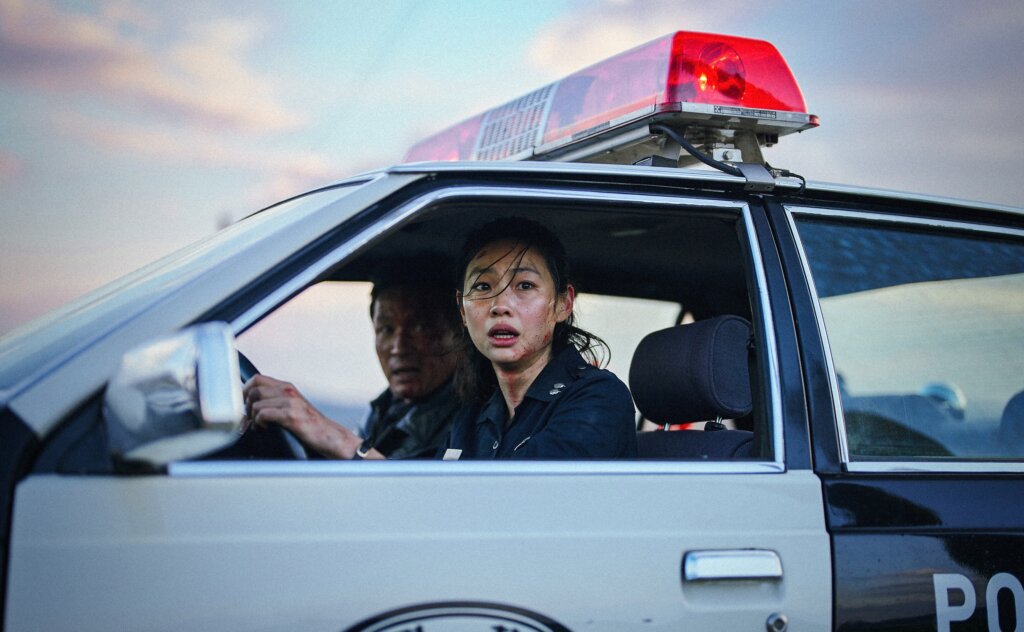
The story takes place in Hope Harbor, a remote South Korean community where reports of a dangerous creature draw the attention of local police and hunters. Police chief Bum-seok (Hwang Jung-min) and officer Sung-ae (Hoyeon) try to deal with the threat in the village, while Sung-ki (Zo In-sung) and his fellow hunters investigate the surrounding forest. Naturally, the situation proves more complicated than tracking down an aggressive wild animal. It also takes an awfully long time to get anywhere.
At first, I was willing to wait. Delaying the appearance of a monster can be an effective way to build suspense, particularly when the audience has to imagine whatever is causing the destruction. But the waiting needs to produce something beyond the awareness that we are still waiting. As Hope dragged through its opening, I became increasingly conscious of how long it was taking to establish the promised threat. The investigation just felt tedious, and I mostly wanted it to hurry up.
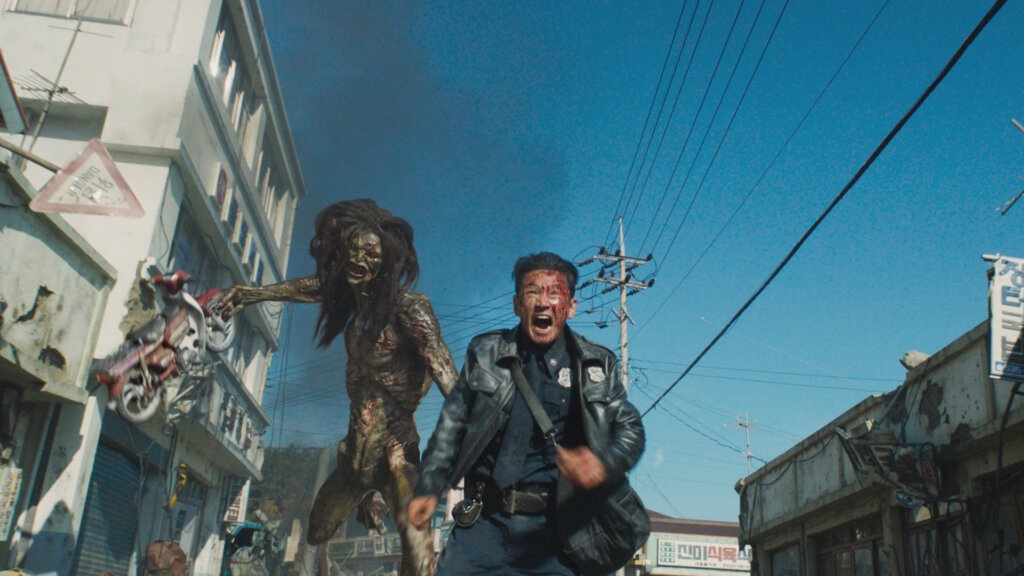
Then the creature finally appears, and the film briefly finds its footing. There’s something frightening about the first sustained encounter, particularly the speed and strength with which the monster tears through cars, homes, and everything else in sight. For a few minutes, the uncertainty surrounding its appearance gives way to a more immediate concern: how is anybody supposed to survive this thing? I stopped thinking about the slow start and became interested in what was happening. This was the film I wanted to watch.
Sadly, Na seems so pleased with this stretch that he keeps repeating it. People run from the monster. They find somewhere to hide. They wait with bated breath. The monster smashes through a wall, and the process begins again. The first time, it works. After several variations, the pauses become an invitation to predict the next entrance. Whenever the characters found shelter, I started looking at the walls and wondering which one was about to become a doorway.
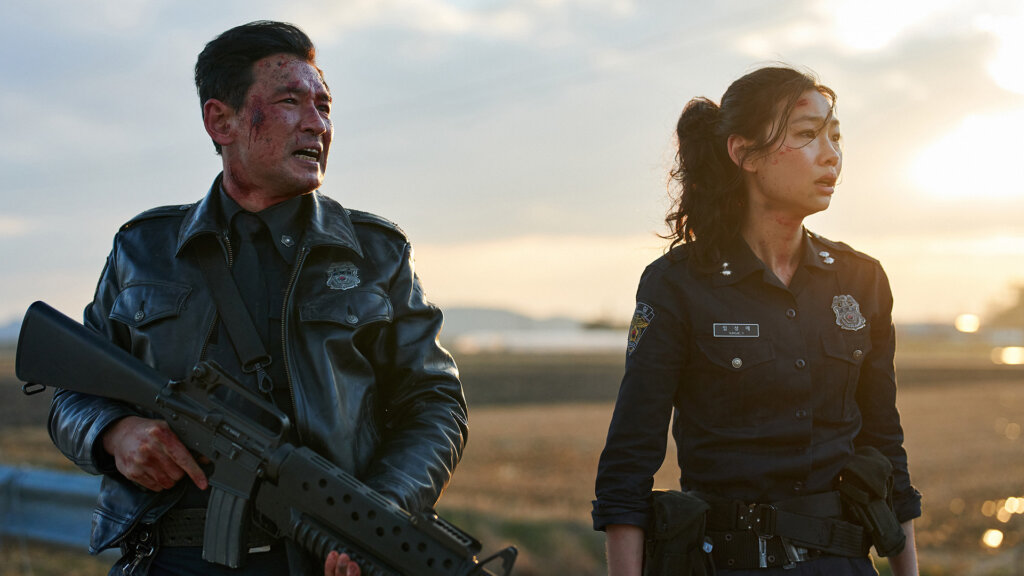
These scenes have plenty of activity, but their rhythm becomes painfully familiar. The hiding places change, yet the dramatic situation barely develops. Each pause prepares another noisy interruption, and each interruption sends people running toward the next pause. Eventually, the monster starts to feel like a mechanical device that the screenplay switches on whenever it needs everyone to move. I was watching people flee for their lives while feeling very little urgency myself.
I don’t expect every monster film to reinvent the genre. As I discussed in my review of The Ritual, familiar material can still make for thoroughly enjoyable horror when the different elements work together. A pursuit can get more frightening as the characters lose resources, make difficult decisions, or discover that their understanding of the threat is wrong. Hope relies so heavily on the same surprise that it teaches the audience exactly what to expect.
When the film finally moves beyond this cycle and starts examining the creatures through different perspectives, I welcomed the change. Perhaps the investigations would give the earlier chaos some meaning. Perhaps the people in the village and the hunters in the forest would uncover something that made their situation more disturbing. Instead, the new information just made the monsters less frightening and genuinely ridiculous.
The revelation involving a mother searching desperately for her lost child is particularly disappointing. The story asks us to reconsider the violence through the perspective of a grieving parent. I understand making the monster less monstrous, but the saccharine shift in tone removed any and all fear of the monster.
A mother’s desperation could make an already dangerous creature more troubling. It could force the people trying to survive to confront the suffering behind the attacks, or make their attempts to protect themselves feel morally dubious. Here, the explanation mostly makes the situation feel familiar. The film gives us an emotional motive without developing it into anything of substance.
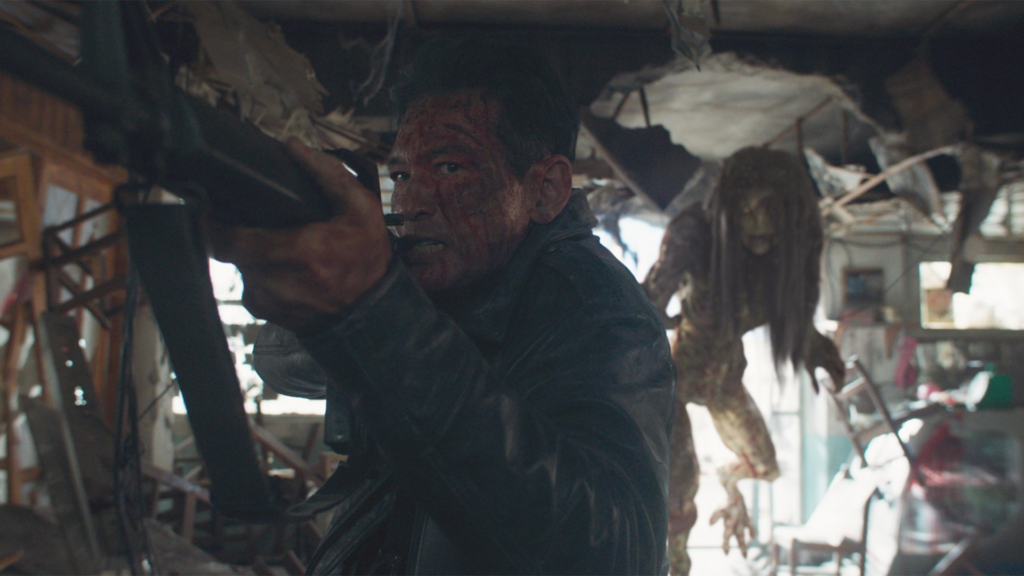
Meanwhile, the hunters encounter other beings near a spaceship, expanding the story into a much larger science-fiction scenario. By this point, however, the first monster has already exhausted most of its ability to frighten me. Adding more creatures does little to help. They introduce further complications and opportunities for pursuit, but I never felt the same brief jolt of terror that accompanied the initial reveal. The film keeps increasing the scale of the situation while my investment in it continues to shrink.
Then the aliens start talking, and things get worse. Any remaining strangeness begins to disappear as their concerns become explicit. Eventually, the conversation pulls a Messiah narrative out of nowhere, just as we (the viewers) are gearing up for the ending. After so much chasing, hiding, and destruction, I was suddenly being asked to care about a larger mythology. I could barely maintain an interest in the smaller story.
It was faintly absurd to reach this stage of such a long film and feel as though somebody has only just started explaining what it’s about. The Messiah material promises something to come, but the promise itself takes the place of a satisfying development. We’ve spent all this time watching the consequences of events whose broader significance is apparently being saved for later. I could understand why the aliens mattered to one another. I still couldn’t see why their Messiah issues should matter to me.
The effects also make the whole film harder to take seriously. At times, the creatures have artificial-looking textures, while the lighting makes them look disconnected from the scene. I became conscious of the digital surface precisely when I should have been absorbed in the danger. For an expensive film released in 2026, some of these images look very unconvincing.
These problems are more noticeable because the film spends so much time showing us its creations. The initial encounter gets some mileage out of surprise. Once that wears off, there’s ample opportunity to examine the effects. The longer I looked at them, the harder it became to take any of it seriously.
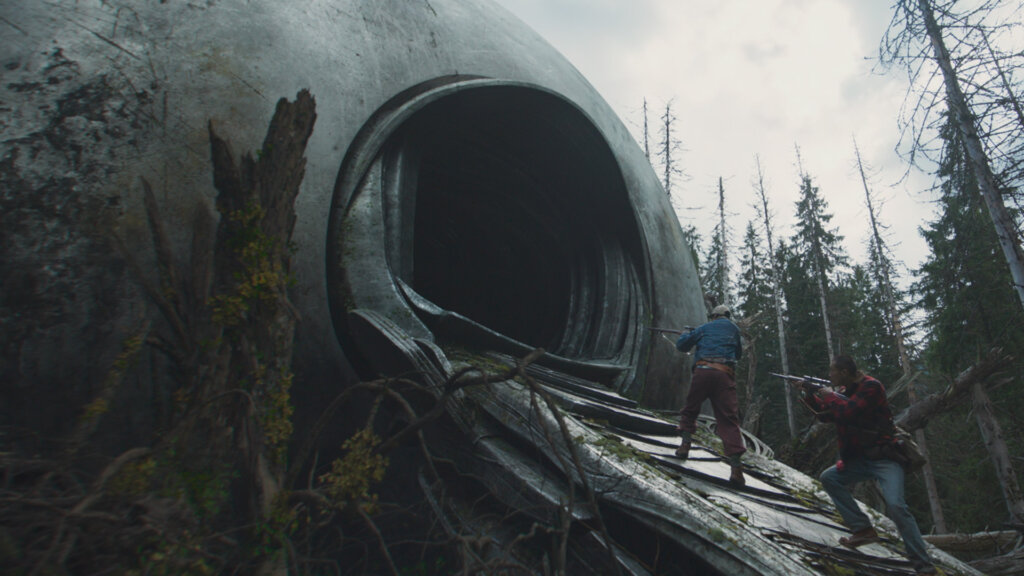
I kept thinking about how much less a film needs to do to sustain this kind of fear. Sweetheart, for all its limitations, builds considerable tension around the simple problem of surviving an encounter with something dangerous. Hope keeps branching outward into additional creatures, competing accounts, and alien history, even as its basic survival scenes get annoyingly repetitive. Each expansion gives the film more material to explain and less room to recover its earlier momentum.
By the end, the sense of watching an incomplete story is difficult to ignore. The alien conversations and late developments are designed to prepare another installment (and maybe another after that). Whatever eventually happens, this film leaves far too much of its appeal dependent on what might come next. After more than two and a half hours, I wanted a conclusion that justified the time I had already spent with these people and creatures. Instead, I felt as though I had sat through an exceptionally long introduction.
There are ideas here about misunderstanding, fear, and the ease with which people treat unfamiliar beings as enemies. The shift toward the aliens’ perspective could have complicated our response to the earlier violence. But Hope is so preoccupied with keeping people running and expanding its mythology that those ideas remain incredibly thin.
That’s what makes Hope so frustrating. It briefly shows that it can be an exciting and even frightening monster film, then gradually wears away the qualities that made that stretch work. I wasn’t expecting Na Hong-jin to transform my opinion of his work. I was just hoping for an entertaining horror film. But I guess I asked for too much.
Hope (2026) Rating: ★ 1/2 out of 5
If you’d like to watch Hope, you can stream, rent, or purchase it via Amazon.
Discover more from Philosophy in Film
Subscribe to get the latest posts sent to your email.
