The End of Oak Street (2026) Review: A Corny Dinosaur Disaster
I went into The End of Oak Street hoping for a little cheap dinosaur fun. The premise is almost impossible to ruin: take an ordinary suburban street, rip it out of the modern world, drop it among prehistoric predators, and force a group of neighbors to survive with whatever happens to be inside their homes. That setup should generate suspense almost automatically. Somehow, David Robert Mitchell’s film makes dinosaur attacks feel dull, family conflict feel synthetic, and a cosmic disaster feel like a made-for-TV movie from the nineties.
Check the current streaming, rental, or purchase options for The End of Oak Street on Amazon.
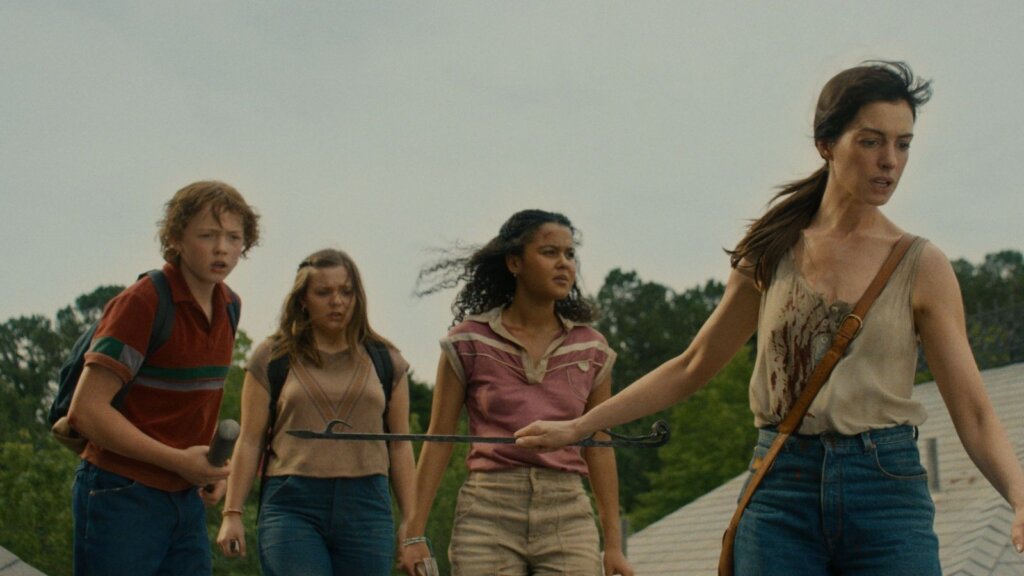
The official description of The End of Oak Street gives away about as much as anyone needs to know. A mysterious cosmic event transports Oak Street from American suburbia to an unknown prehistoric environment. Greg and Denise Platt (Ewan McGregor and Anne Hathaway) suddenly have to protect their children, Audrey and Brian (Maisy Stella and Christian Convery), while their confused—and largely absent—neighbors try to survive.
The basic survival premise carries the film for a while. Familiar lawns and houses still exist, but everything beyond the neighborhood has changed. The people of Oak Street have shelter, food, vehicles, tools, and each other. They also have no outside information or protection from the creatures. Their residential block becomes a sealed social experiment in which every household has to decide whether its resources belong to the individual family or the larger community. But again, this is really all about the Platts. The neighbors are mostly collateral damage.
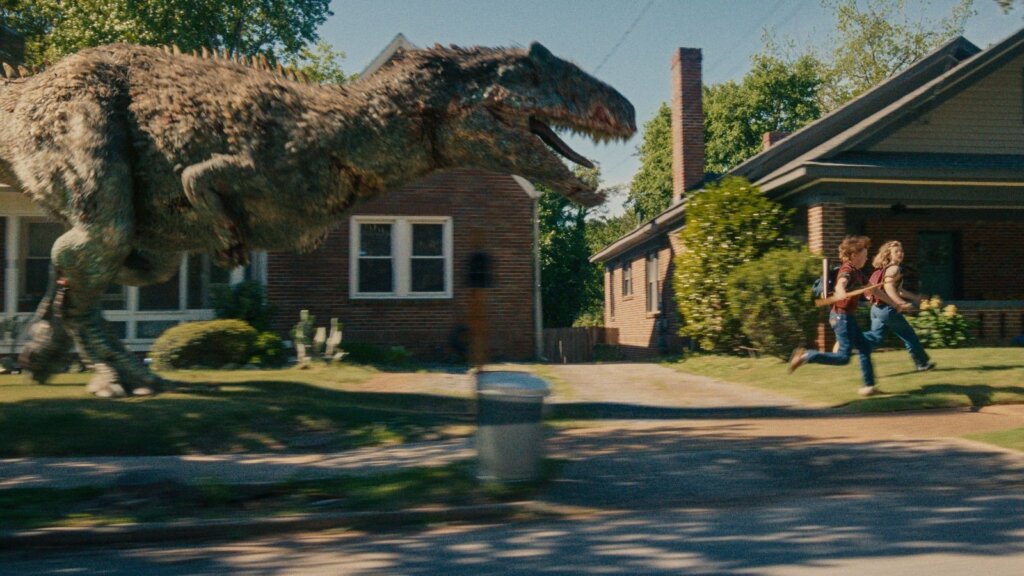
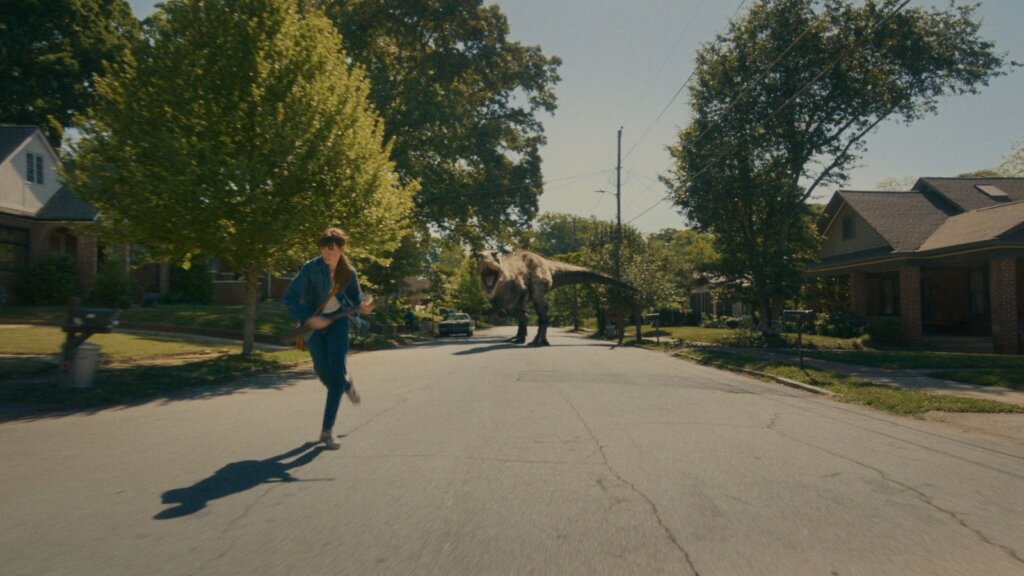
There are one or two moments when the premise creates tension. The first encounters work because the characters still have no idea what’s going on. A later chase down the street has some energy, especially when the size of the creature is contrasted with the painfully ordinary suburban environment.
These moments are rare. Most of The End of Oak Street operates according to the immediate needs of each scene. The dinosaurs appear, disappear, detect people, overlook people, and pursue people. The survivors make equally arbitrary decisions. They wander into danger and separate at foolish times.
Survival stories can withstand some unlikely behavior. Panic makes people irrational, and nobody suddenly transported into a prehistoric ecosystem would possess a complete set of sensible responses. The problem here is cumulative. Nearly every new obstacle exposes another gap in the film’s logic. Supplies matter until they don’t. The boundaries of the transported neighborhood matter until the next set piece needs to move somewhere else. Dinosaurs can be terrifying predators or harmless visual gags, sometimes within the same stretch of the film.
I didn’t particularly like The Last House, but that film at least understood part of the appeal of a survival fantasy. Its family counted food, repurposed household objects, modified the house, and developed increasingly elaborate ways to stay alive. The results eventually became a prepper’s wet dream, yet the survival process had enough detail to create a sense of progression.
The End of Oak Street doesn’t even offer that modest pleasure. I rarely understood how the neighborhood was organizing itself, what resources were available, or why certain residents were given narrative precedence over others. The film introduces the possibility of collective survival and then treats the community as a supply of disposable bodies. Most of the neighbors receive one exaggerated trait before becoming dinosaur food.
This also prevents the film from doing much with its miniature society. A group cut off from government and public infrastructure could reveal how quickly property, leadership, and cooperation become contested. Who controls the food? Which family has the most useful skills? Is a stocked pantry still private property when children next door are starving? The film brushes against questions like these before rushing toward another attack or another cloying family moment.
The family drama is the worst by far. Mitchell frames Greg and Denise as a couple whose marriage has already begun to fracture before the dinosaurs arrive. Denise feels confined by her domestic life, while Greg carries his own disappointments and financial anxieties. Their catastrophe could have forced both characters to confront the difference between remaining together out of habit and choosing one another under pressure.
Instead, the screenplay pushes them through a sentimental reconciliation that feels predetermined from the opening scenes. The family theme resembles an overly earnest adventure film from years past, complete with corny declarations and broad emotional cues. The music and performances repeatedly announce how you should feel, though I never felt anything but frustration.
The tone is especially painful whenever the film attempts comedy. A scene involving dinosaurs having sex is literally designed to produce an easy burst of embarrassed laughter. Another “gag” has a dinosaur eating ice cream from an overturned ice cream truck. Hilarious, right?
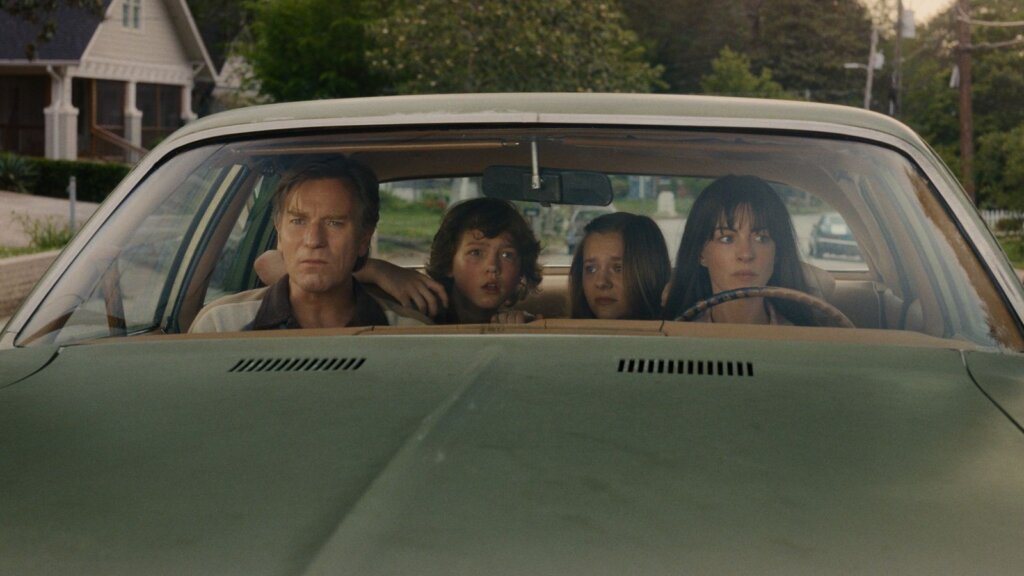
A horror-comedy can make a monster funny without sacrificing danger. The humor has to emerge from character, timing, or the absurdity of people trying to behave normally during a crisis. Here, the jokes feel like someone in a development meeting insisted that the film needed a few cute dinosaur moments for the trailer. The creatures turn into oversized pets whenever the screenplay wants charm, then resume killing people once the next action sequence starts.
Sweetheart shows how much a creature feature can accomplish with a simple survival structure. That film establishes a location, gives its monster power, and lets the protagonist learn through observation and failure. Each encounter adds information and tension. The End of Oak Street keeps adding incidents without building a coherent survival process.
The production doesn’t help. Despite the recognizable cast and obvious aspirations toward summer spectacle, much of the film looks cheap. The lighting is flat, the suburban spaces lack visual scale, and several effects shots would have looked ordinary in a television production thirty years ago. The inconsistency is impossible to ignore because the film depends so heavily on the novelty of seeing prehistoric animals (something Spielberg already did much better over three decades ago).
I found myself thinking about the visual limitations more often than the danger. A strong low-budget creature feature can turn restriction into style. It can hide the monster, fragment its body, or use sound and editing to make the unseen space frightening. Mitchell reaches for large-scale spectacle without having the visual resources needed to sell it. The result has bigger-budget aspirations and bargain-bin texture.
Hathaway and McGregor are capable performers, but they spend much of the film trying to supply conviction that just isn’t in the writing. Hathaway has the more substantial role because Denise’s dissatisfaction gives her something resembling an internal conflict. Even so, the character’s development works as another route toward the film’s tidy celebration of family unity. McGregor is asked to move between weary father, inadequate husband, comic suburban dad, and heroic protector without enough connective tissue.
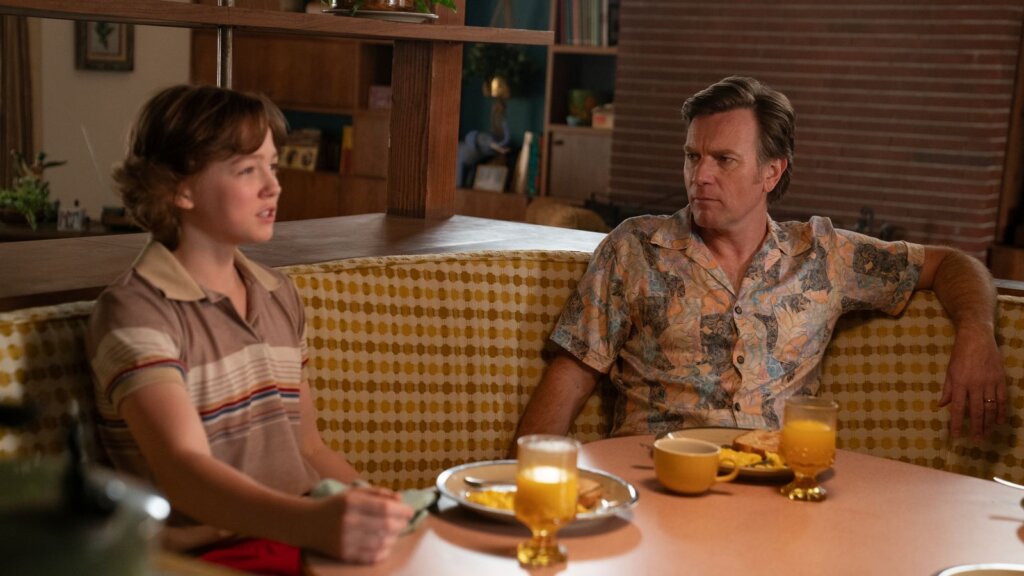
The younger actors fare no better. Audrey’s interest in science could have made her useful to the group’s survival, while Brian’s fear could have revealed how children process a world their parents can’t explain. Both ideas sit underdeveloped. The supporting ensemble is broader still, populated by types whose behavior can be predicted almost immediately.
The sentimental treatment of collective danger reminded me of Train to Busan, included in my list of philosophical zombie films. I already find that film far too eager to force an emotional response, but its central conflict between selfish exclusion and mutual dependence is at least coherent. The passengers need one another, and every act of cowardice damages the group’s ability to survive. Oak Street has the same raw ingredients without any of the social consequences.
There’s a potentially interesting philosophical question buried beneath all the dinosaur chaos. When every familiar institution disappears, does the family become the final source of moral obligation, or can a larger community form around shared vulnerability? The film settles for the safest possible answer. Family members stick together, personal resentments recede, and catastrophe becomes a test proving that domestic bonds were valuable all along. Jee-whiz, that’s swell.
I think that conclusion could almost have been palatable if the Platts felt like a specific family rather than a collection of familiar emotional roles. Their conflicts arrive as screenplay information. Their reconciliation arrives as screenplay resolution. The dinosaurs merely accelerate a lesson the film wanted to teach us.
That same mechanical quality undermines the suspense. Passenger also managed a few effective scares inside a badly written story, and The End of Oak Street lands in similar territory. A sudden attack can still produce a reaction. Isolated tension, however, can’t carry a film whose logic, tone, characters, and effects keep working against one another.
By the end, I was exhausted by how hard The End of Oak Street tried to manufacture affection for its family. The comedy failed, the creatures lost their menace, and the survival mechanics never developed beyond a few emergencies. The film had every opportunity to become pulpy fun, suburban horror, a community survival story, or an absurd dinosaur comedy. It moves among all four and handles each one badly.
Corny as hell, visually cheap, and almost impressively illogical, The End of Oak Street wastes one of the year’s easiest premises. Dinosaurs invade suburbia, and somehow boredom is the only thing that survives.
The End of Oak Street (2026) Rating: ★ out of 5
Watch or own the film: Check the current streaming, rental, Blu-ray, or purchase options for The End of Oak Street on Amazon.
Discover more from Philosophy in Film
Subscribe to get the latest posts sent to your email.
