



Opus works best before it explains anything. For much of writer-director Mark Anthony Green’s feature debut, the film traps its characters inside a celebrity’s private world and allows admiration to curdle into obedience. The isolated compound is unnerving, the rituals are strange without immediately becoming ridiculous, and sudden bursts of violence give the satire real consequences. By the time the film tells us precisely what all of this means, however, it has already made the point more effectively through atmosphere.
Ayo Edebiri plays Ariel Ecton, a young journalist whose intelligence has not done much to boost her career at a popular music magazine. When legendary pop star Alfred Moretti resurfaces after decades away from public life, Ariel joins a small group of influential guests invited to hear his new album at a remote desert compound. Moretti’s followers anticipate his needs, observe unfamiliar ceremonies, and treat his creative decisions with the reverence normally reserved for sacred revelation.
Stream, rent, or buy Opus on Amazon.

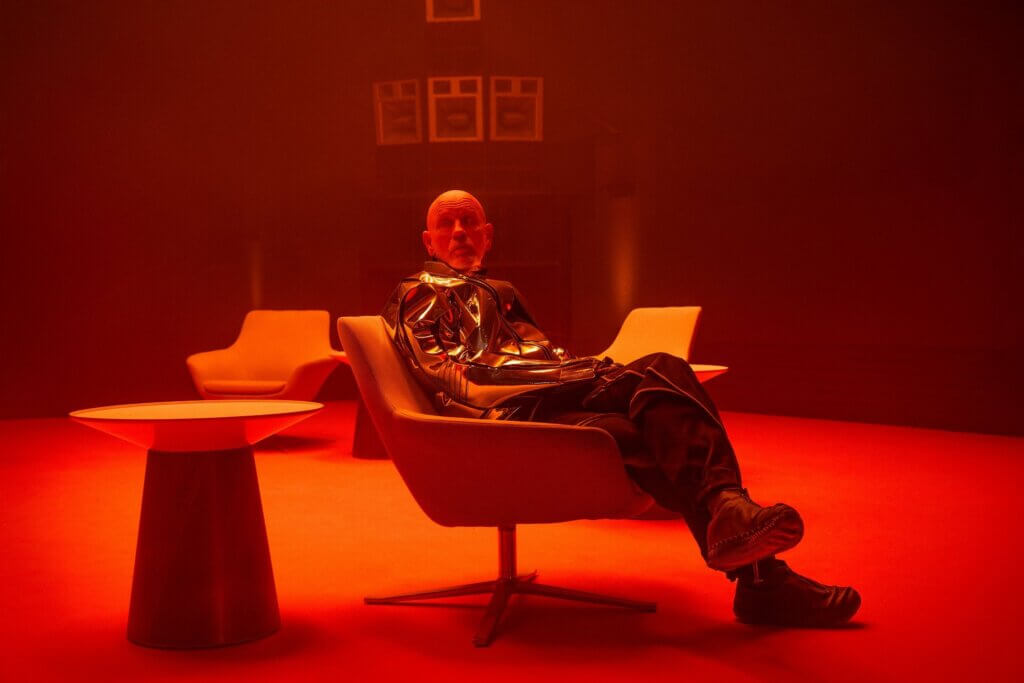
The premise immediately places Ariel in a useful contradiction. She is perceptive enough to recognize that something is wrong, but she is also flattered to have been invited. The same access that should allow a journalist to scrutinize Moretti makes honest scrutiny more difficult. Everyone has been selected because their attention carries cultural value, yet the invitation encourages them to behave as though Moretti has bestowed that value upon them.
Edebiri makes Ariel a strong audience surrogate. She reacts to the compound with skepticism without becoming implausibly immune to its appeal. Her performance is good rather than exceptional, but its relative restraint helps stabilize a film crowded with deliberately eccentric behavior. Ariel doesn’t need to become the loudest person in the room. Her purpose is to notice how quickly everyone else accepts Moretti’s control.
The arrangement resembles the seductive private paradise of Blink Twice, where exclusive access initially disguises the loss of personal agency. In both films, powerful hosts control information, movement, and the terms under which their guests understand what is happening. The difference is that Moretti does not merely use celebrity to conceal his authority. Celebrity is the foundation of that authority.
I’ve seen first-hand how celebrity can make people do things they otherwise wouldn’t. I worked in the film industry for two-and-a-half arduous years. I was in the casting department, and it was absolutely soul-crushing. But I met famous people, I saw how others reacted, and I even learned something about how I interacted with them. My inclination was to treat the rich and famous with the respect of privacy and solitude, but still be at their beck and call, albeit from the periphery. I thought that, in my own way, I was overcoming the allure of celebrity culture, but I was no better than the sycophants begging for selfies. I was just a more self-righteous sycophant.
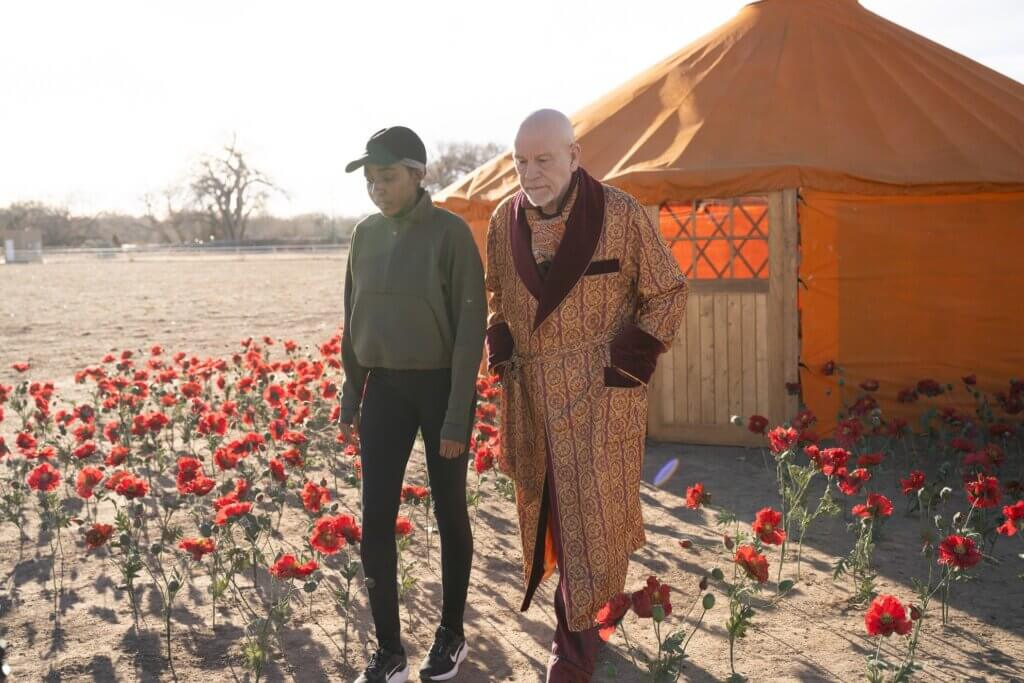
In the film, these varying reactions and multifaceted degrees of sycophancy work to turn fandom into religion. The followers’ clothing, labor, language, and bodies all express devotion to a man they regard as more than an entertainer. Moretti’s long absence has only increased his power. Scarcity creates mystery, while mystery allows admirers to imagine depth wherever ordinary explanation is missing. His return is treated less like an album release than the arrival of a prophet carrying new scripture.
Green has described Opus as an exploration of the cult of celebrity and the pressure that Moretti’s society places on members of the press in an interview with Third Coast Review. The film’s sharpest idea is that journalists are not positioned outside this belief system. Even when they criticize celebrities, they depend upon celebrity for access, readership, and professional prestige. Moretti understands that the people who shape his public image need him almost as much as his followers do.
This makes the compound more than a convenient horror setting. It is a secular temple in which every detail has been arranged to reinforce Moretti’s importance. The guests enter as supposedly independent observers, but they eat his food, follow his schedule, surrender ordinary privacy, and wait for permission to experience his art. Their helplessness grows gradually because each concession can still be mistaken for hospitality.
The bright communal menace inevitably recalls Midsommar, although Opus is more openly satirical and far less impactful. Green gets considerable mileage from the contrast between the compound’s polished surfaces and its disturbing customs. Nothing initially resembles the improvised chaos people might associate with a dangerous cult. Moretti’s world is organized, attractive, and staffed by people who appear completely certain of their purpose. Their composure makes the danger harder to dismiss.

The violent set pieces are similarly effective because they rupture this controlled environment. Green does not sustain terror as consistently as Ari Aster does, but several moments land with an abrupt physical force that the surrounding comedy cannot soften. Once the guests begin to understand how little control they possess, the film becomes a satisfying thriller about people discovering that their invitation was never evidence of their importance.
Moretti himself is less successful. I have never particularly enjoyed John Malkovich’s screen presence, and Opus leans heavily into the qualities I find distracting. His affected delivery and cultivated eccentricity keep reminding me that I am watching a performance. Some of that artificiality suits a pop star who has spent his life turning himself into an object of worship. The larger problem is that the screenplay writes Moretti as a caricature, giving Malkovich little reason to search beneath the poses.
A convincing celebrity cult does not require its leader to be likable, but it does require some understanding of why people surrendered themselves to him. Opus often substitutes Moretti’s strangeness for charisma. The elaborate clothing, dancing, declarations, and rituals tell us that he possesses an overwhelming presence without always allowing us to experience it. Consequently, his followers sometimes seem devoted because the story requires devotion rather than because Moretti really inspires it.
The film’s treatment of fame nevertheless connects to the relationship between taste, celebrity, and social power in John Waters’ films. Celebrity does not eliminate hierarchy. It creates a new system of believers, gatekeepers, rivals, and spectators, all competing for proximity to the person at its center. Moretti’s followers may reject the ordinary world, but they rebuild it around an even more absolute authority.

This is already clear well before the final act, which is why the eventual explanation proves so frustrating. The climax becomes increasingly exaggerated, while the film’s philosophical account of its own events feels pretentious and overextended. Ambiguity is not automatically profound, but neither is a lengthy explanation. Opus had communicated its argument through the behavior of the guests, the discipline of the followers, and the transformation of an album preview into a sacred ceremony. Verbalizing the idea at length makes it feel smaller.
I liked the film more when I was still working out the precise relationship between Moretti, the compound, and his guests. Once the answers arrive, the satire becomes obvious, and the villain moves even further into caricature. The ending doesn’t destroy what came before it, particularly because the violence retains some force, but it replaces an unsettling atmosphere with an over-the-top statement of intent.
Even so, Opus remains an entertaining and visually controlled horror satire. The compound, the ceremonies, and the guests’ growing powerlessness create a persuasive world, while Ariel gives the audience a grounded position from which to observe it. Green understands that celebrity worship already possesses many features of religion: ritual, testimony, sacrifice, sacred objects, and a community held together by belief in someone more important than themselves. The film falters when it explains that comparison.
Opus (2025) Rating: ★★★ out of 5
If you’d like to watch Opus (2025), it is currently available to stream, rent, or purchase via Amazon.