


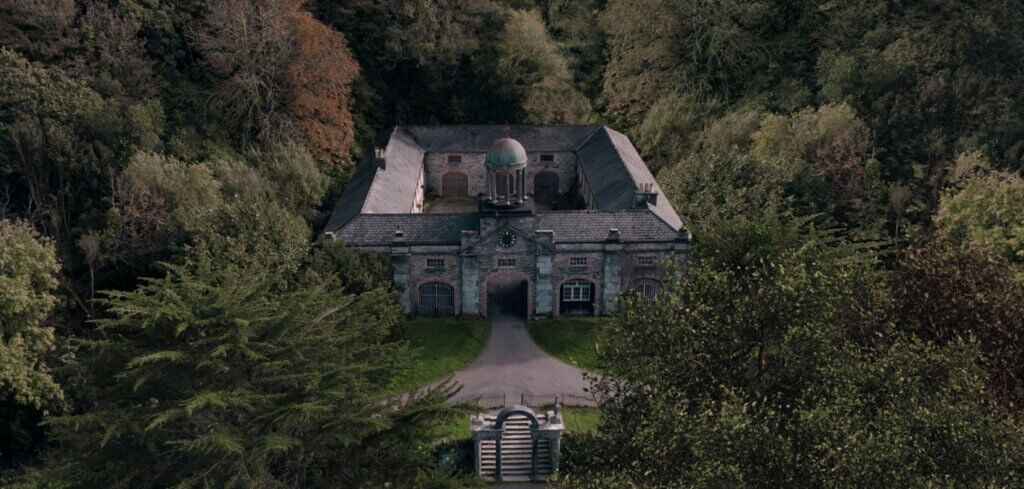
There is something deeply unpleasant about watching an inanimate “object” suddenly appearing in a different spot. Oddity works with this kind of fear. Its best scares don’t depend on elaborate mythology or constant movement. They come from the suspicion that a room has changed while our attention was elsewhere.
Writer-director Damian McCarthy builds much of the film around a remote stone house undergoing renovation. Its enormous central room should feel open, but the unfinished architecture makes it a trap. Staircases, dark corners, uneven floors, and openings between rooms all provide ways for someone to watch, hide, or wait.
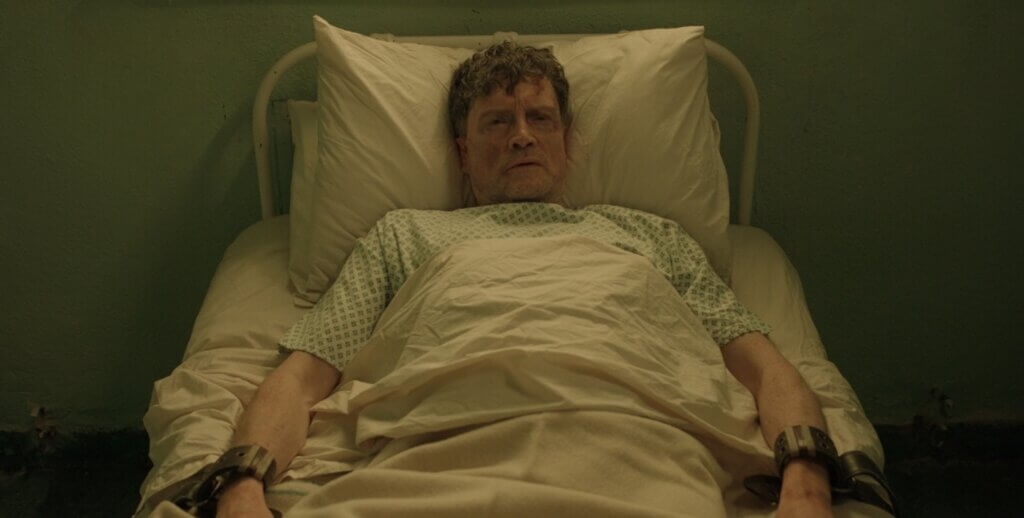
The film begins with Dani Odello-Timmis (Carolyn Bracken) alone inside the house. A stranger arrives at her door and claims that someone has entered without her knowledge. Dani must decide whether the greater danger is the disfigured man asking to come inside or the person he insists is already there.

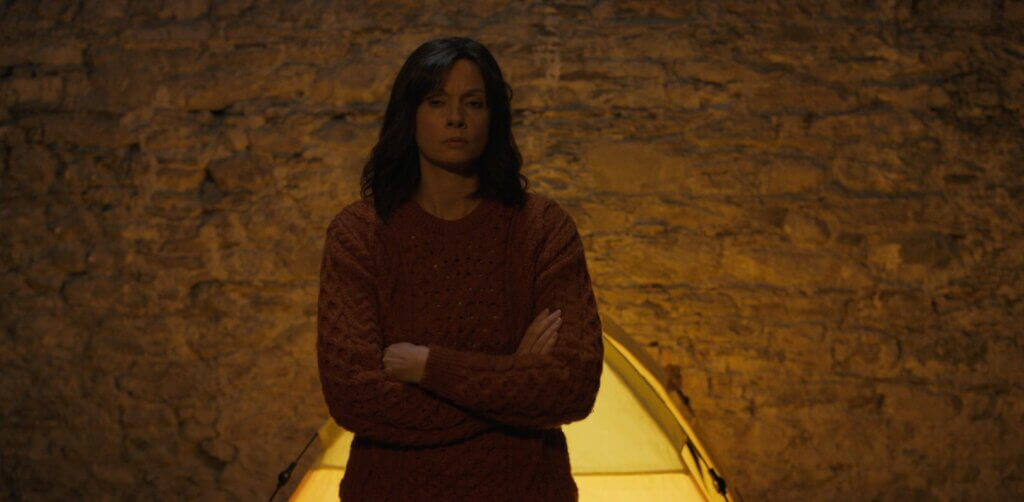
A year after Dani is murdered, her blind twin sister, Darcy, arrives at the house with a large wooden figure from her cabinet of haunted objects. Darcy believes she can discover what happened to Dani, and her visit gradually turns an apparent murder investigation into a supernatural reckoning.
McCarthy has described Oddity as a mixture of ghost story and slasher film. That combination explains the film’s peculiar rhythm. Long periods of silence and uncertainty are interrupted by brief eruptions of startling violence. The result is not consistently terrifying, but it produces several genuinely chilling moments.
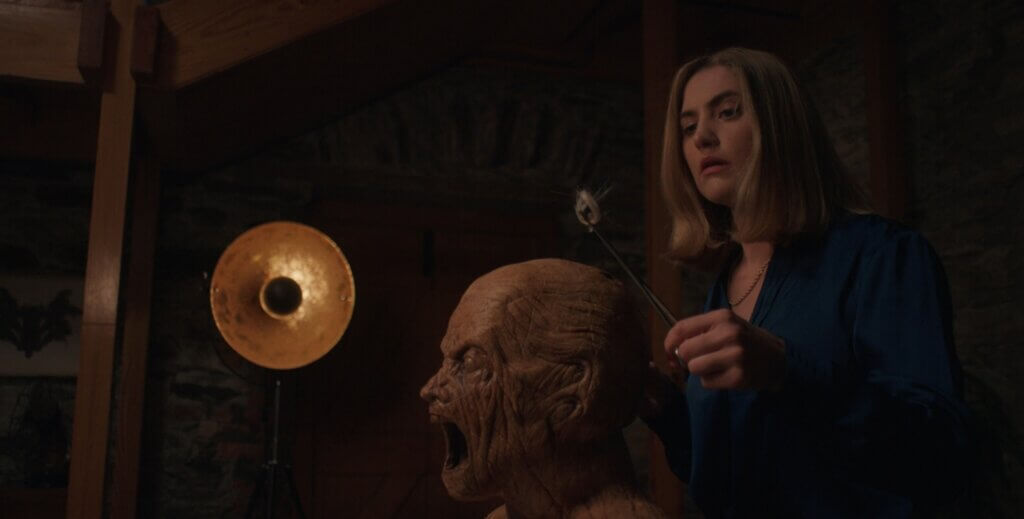
The wooden golem is the film’s most successful creation. Its vacant eyes, open mouth, and unfinished body suggest something trapped between an object and a living person. McCarthy wisely allows it to spend much of the film sitting in one place. Every cut away from the figure creates the possibility that something will have changed when the camera returns.
Whether the golem has actually moved is often less important than the possibility that it could. Horror usually weakens once a monster begins explaining itself, but Oddity derives considerable power from withholding movement. The figure is frightening because it appears capable of action while remaining completely unreadable.

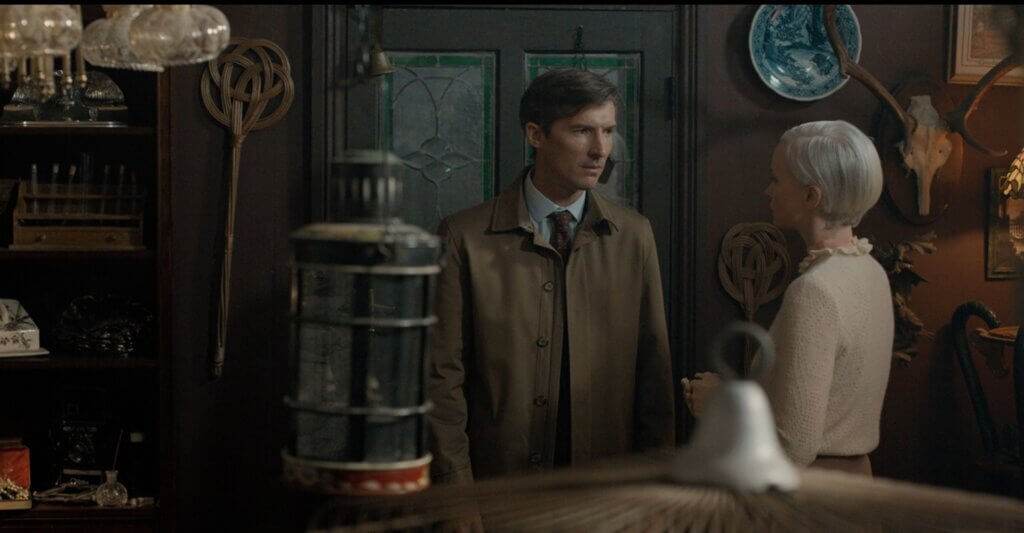
The sound design supports that well. McCarthy frequently removes the usual musical guidance and leaves characters surrounded by small noises whose sources cannot be immediately identified. Footsteps, floorboards, and disturbances in another part of the house become more effective than a conventional score.
Darcy’s blindness intensifies this approach. She cannot survey the room or confirm that an object remains where she left it. She must rely upon sound, memory, and her familiarity with the supernatural. The house is also filled with physical hazards that have nothing to do with ghosts. Its stairs and unfinished spaces offer sinister people countless opportunities to exploit her vulnerability.
The film doesn’t reduce Darcy to helplessness, though. She enters the house with greater confidence than nearly anyone else and often appears to understand the situation better than the people who can see. Still, her physical vulnerability is real. When she moves through the house alone, the audience becomes acutely aware of every obstacle and unaccounted-for presence.
Darcy remains emotionally distant, however. Bracken gives her a cold, deliberate presence that separates her from the more open and ordinary Dani. The distinction works within the story, particularly because Darcy rarely enters a scene without some concealed purpose. Yet it also makes her difficult to know beyond her grief and determination.

That emotional distance shapes the film’s central theme. Oddity is less interested in mourning than in the moment grief becomes revenge. Darcy does not arrive hoping to accept her sister’s death. She converts loss into an instrument through which the people responsible can be exposed and punished.
In Talk to Me, grief creates a dangerous desire to maintain contact with the dead. Oddity approaches loss differently. Darcy does not seek comfort from the supernatural. She treats it as a practical force that can carry her anger into the physical world.
The haunted objects in her shop are containers for unresolved suffering. Each one retains some trace of a death, personality, or violent intention. They suggest a world in which emotional pain does not disappear. It attaches itself to things and waits for someone capable of activating it.
This is also where Oddity begins to lose some of its power. Under-explained supernatural forces can be frightening because they resist ordinary understanding. But when absolutely anything seems possible, fear can give way to indifference. If the audience cannot identify even the broadest boundaries governing a threat, it becomes difficult to anticipate consequences or understand why one supernatural intervention occurs instead of another.

I do not want the film to explain every haunted object or reduce its occult world to a list of rules. Too much explanation would destroy the mystery. There is nevertheless an important difference between mystery and arbitrariness. Oddity occasionally crosses that line.
The irony is that the film addresses this problem through its characters. Darcy accepts the supernatural with complete certainty, while the people around her question how these objects work and whether their supposed powers possess any rational consistency. Their skepticism is not entirely unreasonable. Even within the world of the film, supernatural knowledge remains incomplete.
This creates an interesting conflict between rationality and belief. The skeptical characters are too confident that anything beyond their experience must be impossible. Darcy, meanwhile, possesses genuine knowledge but not necessarily a complete understanding of the forces she uses. Neither worldview is sufficient on its own.
The film’s supernatural uncertainty resembles the ambiguity surrounding trauma in Never Let Go. Both films give emotional suffering a physical presence while withholding firm answers about where psychology ends and literal evil begins. In Oddity, however, this uncertainty is attached to so many objects and abilities that the connecting logic sometimes becomes difficult to locate.

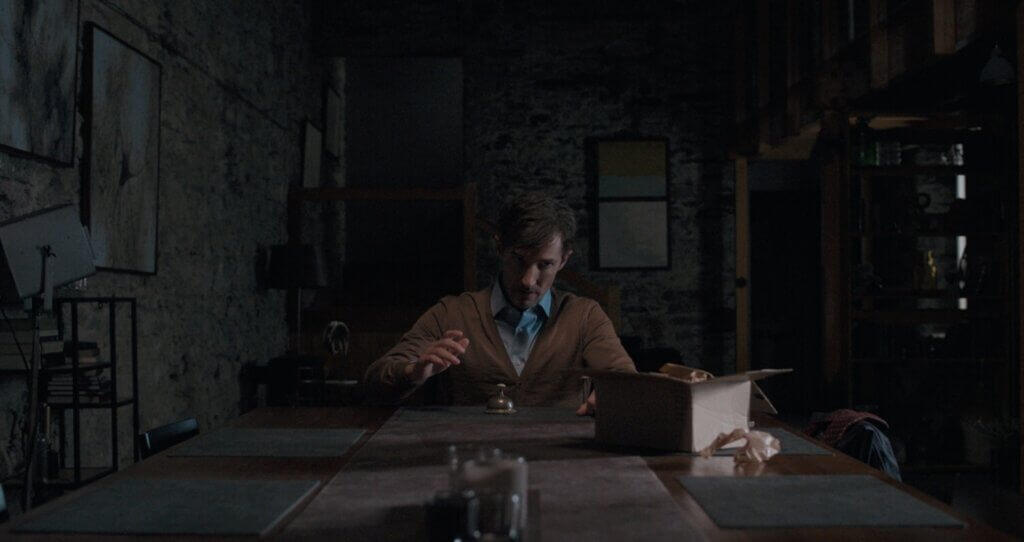
This is the primary reason Oddity does not equal McCarthy’s Caveat. That film begins with an absurd but wonderfully specific restriction: a man agrees to wear a locked harness that limits his movement inside an isolated house. Once established, that single condition infects nearly every room and decision.
Caveat feels like one elaborate machine designed to trap its protagonist. Oddity feels more like a cabinet filled with individually frightening ideas. The stone house, blind clairvoyant, violent stranger, haunted objects, and wooden golem all work, but they don’t always intensify one another with the same precision.
The premise and execution of Caveat are simply stronger. Its strange rules create claustrophobia, while the looser rules of Oddity sometimes release tension by making the next development impossible to anticipate. Surprise remains, but anticipation is often the more valuable ingredient in horror.
At the same time, Oddity is substantially better than Hokum, in my humble opinion. It is tighter, more visually disciplined, and better at concentrating attention around a few threatening objects. McCarthy allows the farmhouse and the golem to carry long stretches of the film without burying them beneath excessive mythology.
The performances support the tension, though they’re not what stayed with me afterward. Bracken handles the contrasting roles of Dani and Darcy effectively, and the supporting cast understands the film’s restrained tone. Still, the house, golem, silence, and violence leave a stronger impression than any individual performance.
The violent deaths are particularly effective because the film does not maintain that level of aggression throughout. When violence arrives, it feels extremely abrupt and ugly. These moments provide the slasher element McCarthy wanted without turning the entire film into a conventional body-count exercise.
The later sections bring Darcy’s revenge into focus without completely clarifying the supernatural system behind it. The emotional logic is stronger than the metaphysical logic: grief demands an outlet, guilt eventually returns, and people who believe themselves protected by rational explanations discover that reason cannot erase what they have done.
Oddity is a skillfully constructed supernatural revenge film with an excellent setting and several genuinely chilling sequences. Still, the film’s greatest weakness is its elastic supernatural logic. Mystery can encourage fear, but a world in which nearly anything might happen for reasons the audience cannot understand risks becoming less frightening rather than more. Oddity occasionally approaches that point, even as its characters implicitly recognize the problem.
Oddity (2024) Rating: ★★★½ out of 5
If you’d like to watch Oddity (2024), it’s currently available to rent, stream, or purchase via Amazon.