


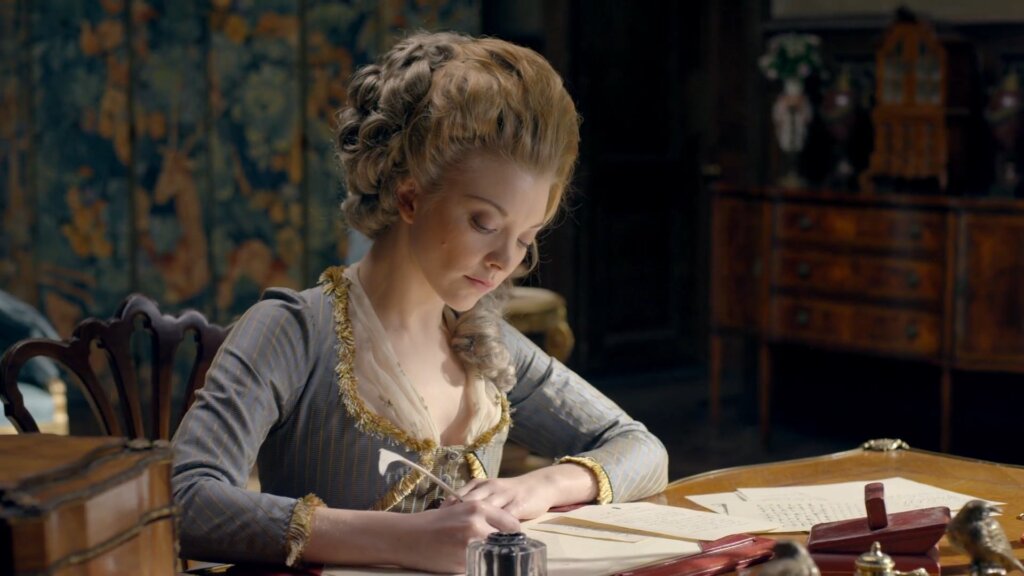
I’m surprised that The Scandalous Lady W didn’t attract more attention. It has Natalie Dormer at the height of her Game of Thrones popularity, a genuinely outrageous historical scandal, lavish Georgian costumes, and enough sex and courtroom drama to make it marketable. Instead, it aired as a British television film in 2015 and largely slid under the radar.
That’s a shame, because it’s an entertaining and attractive production. It’s also frustrating, because the real story gives the filmmakers far more to work with than the film ultimately explores.
Dormer plays Seymour Worsley, a wealthy heiress trapped in a miserable marriage to Sir Richard Worsley (Shaun Evans). Richard is controlling, emotionally distant, and far more interested in possessing Seymour than loving her. Their unconventional sexual relationship gradually becomes another form of control, with Richard encouraging and observing her encounters with other men.
Seymour eventually runs away with Captain George Bisset (Aneurin Barnard), one of Richard’s friends and the father of her daughter. Richard retaliates by bringing a “criminal conversation” case against Bisset. He demands £20,000 in damages on the grounds that Bisset has interfered with his property: Seymour.

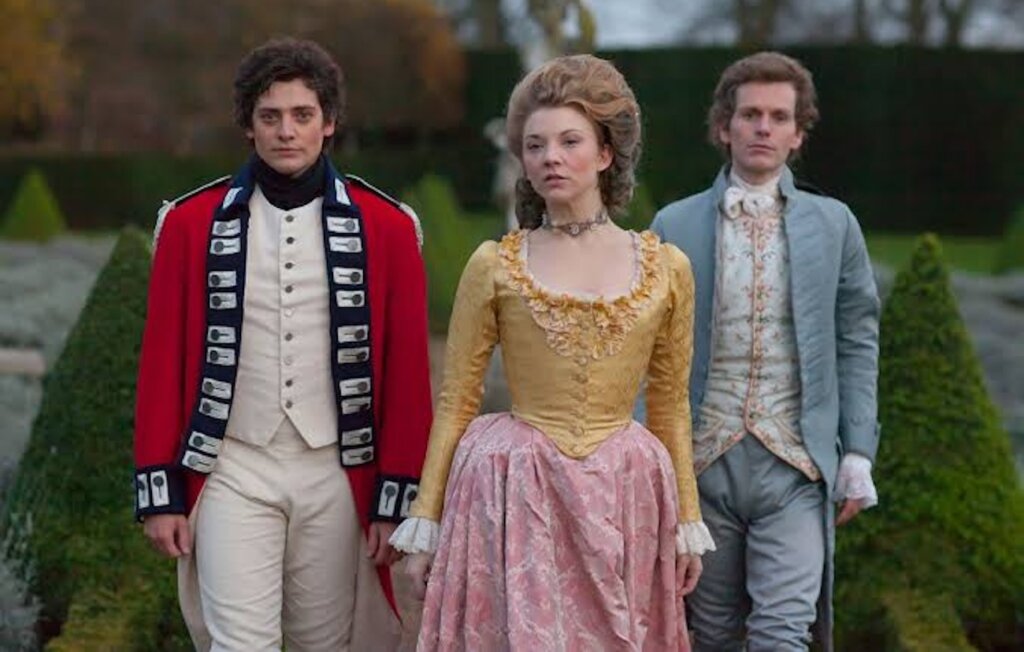
The legal language makes the film’s central conflict very explicit. Seymour is present at the trial, but the case is technically between two men arguing over her value. Her husband claims that another man has damaged something belonging to him. Her desires only become legally relevant when they can increase or reduce the financial value assigned to her body.
Seymour’s only viable defense is to expose the intimate details of her marriage and demonstrate that Richard had already encouraged her relationships. To resist being treated as valuable property, she must publicly establish that she has little value as property.
There’s something both liberating and self-destructive about that strategy. Seymour takes control of the story, but she can only do so within a system built to humiliate her. Her sexual history is evidence, her body is the disputed object, and her reputation is something she must sacrifice to prevent Richard from destroying Bisset.
The contradiction recalls the problem of sexual liberation I discussed in my essay, Metzger’s Women: a woman may appear sexually free while the meaning and value of her sexuality are still being determined by men. Seymour chooses her lovers, but Richard attempts to control the circumstances, the spectacle, and eventually the public interpretation of those choices.

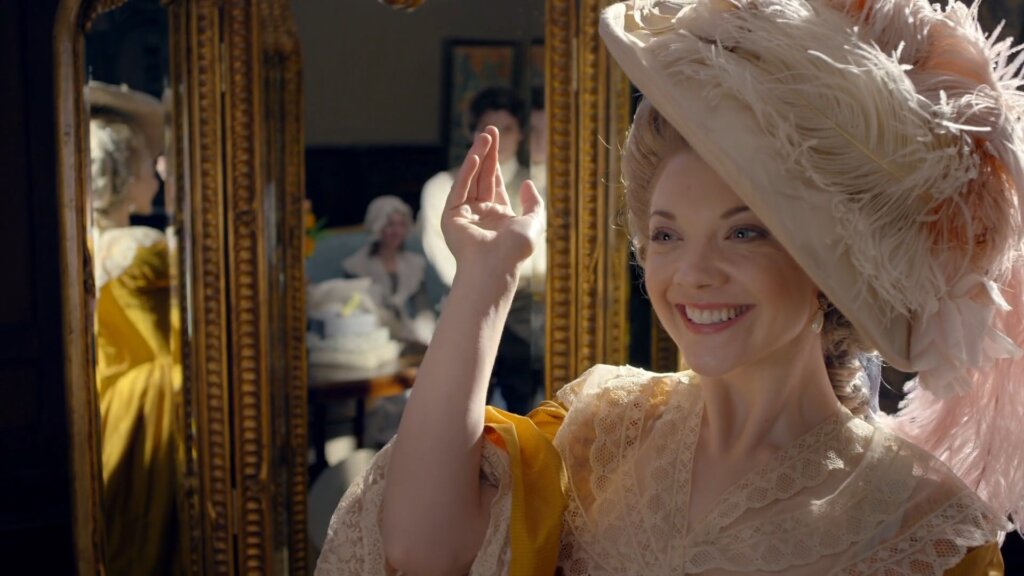
Unfortunately, the film does not go very far beyond identifying that hypocrisy. Its feminist framing is explicit enough to feel modern and accessible, but too neat to capture the full contradiction of Seymour’s position. She is presented as a bold woman ahead of her time, surrounded by men who either want to possess her or are too weak to stand by her.
That interpretation is not entirely wrong, but it’s dramatically limiting. Historical films inevitably reinterpret their subjects, and I certainly don’t expect them to reproduce every detail of the historical record. Still, as I discussed in my review of The Flood, reimagining history should reveal something interesting about the people involved. It should not simply flatten them into figures who fit a convenient contemporary narrative.
Sir Richard suffers most from this approach. Evans makes him suitably pathetic and unpleasant, but the character never develops much psychological substance. His voyeurism, jealousy, political ambition, and obsession with ownership could have formed a fascinating portrait of a man who confuses control with intimacy. Instead, Richard becomes a simplified patriarchal villain whose primary function is to give Seymour something to resist.
Bisset is even thinner. He represents romantic escape, but the relationship never develops enough weight to make him feel like much more than the route Seymour has chosen out of her marriage. This weakens the love story and makes Seymour’s sacrifices feel more theoretical than personal.
Dormer does what she can to hold everything together. She gives Seymour significance without making her completely invulnerable, and she is especially good at showing the difference between sexual boldness and emotional certainty. Seymour may know what she does not want, but that does not mean she fully understands what freedom will cost her.
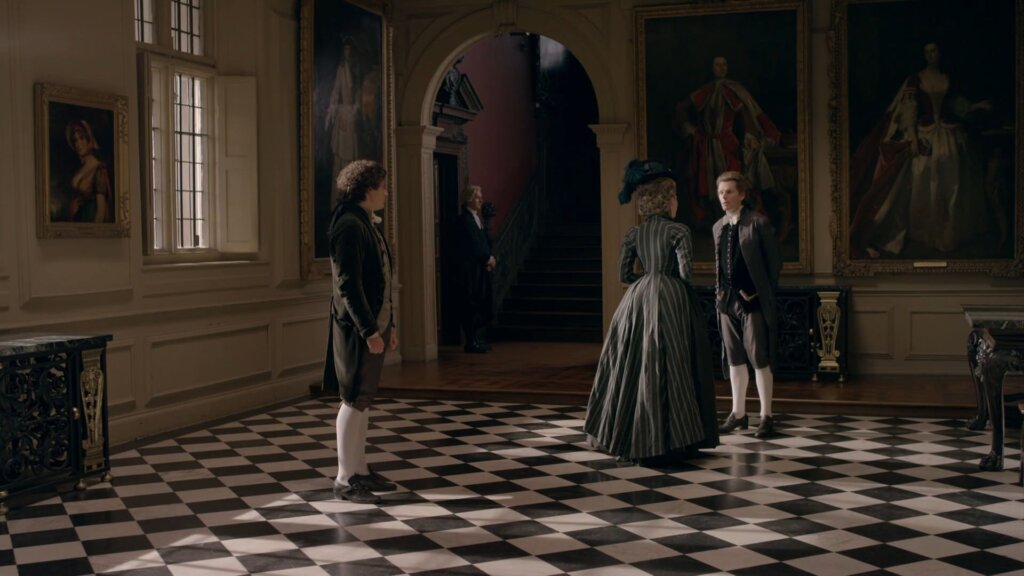
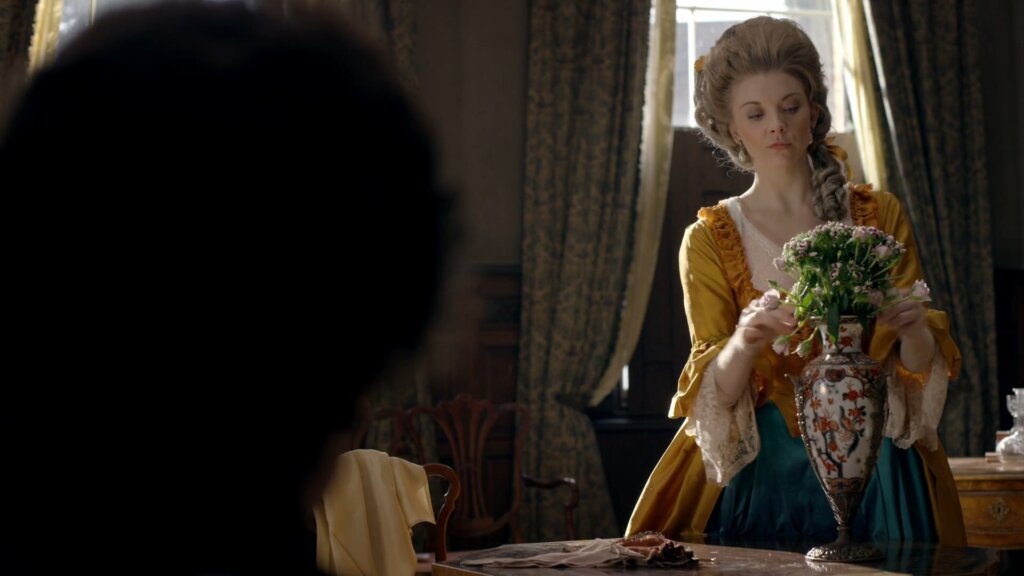
Still, the production often makes a stronger impression than any of the performances. The costumes are particularly well done, especially for a made-for-television film. Seymour’s dresses and military-inspired riding clothes communicate defiance and changing social status without appearing like generic period-drama decoration. The interiors, candlelight, country estates, and crowded courtrooms give the film a scale that its television budget usually would not have allowed.
Like the immaculate home in Swallow, these beautiful surroundings also function as a form of confinement. Seymour lives among expensive objects while being treated as another one of them. The film looks elegant because her prison is elegant.
The trial itself is entertaining, but it nearly reduces the film to a salacious, by-the-book courtroom drama. Witnesses appear, scandalous details are revealed, spectators gasp, and Richard’s public image begins to collapse. The sequence works as drama, but it leaves many of the film’s more difficult questions untouched.
The real case inevitably depends upon these revelations. Historian Hallie Rubenhold, whose book inspired the film, explains how Seymour used the humiliating details of her marriage to undermine Richard’s claim. Yet the adaptation seems more interested in the satisfaction of watching Richard lose control of the narrative than in examining what Seymour must surrender to make that happen.
That’s the difference between defeating a man and escaping the system that empowered him. Seymour can embarrass Richard, expose his hypocrisy, and reject the role he assigned to her. None of this necessarily gives her real independence. The courtroom may reverse the direction of the humiliation, but it does not stop treating a woman’s sexual history as a public commodity.
The film gestures toward the hollowness of Seymour’s victory without giving its consequences enough time to settle. I understood what she risked and lost, but I rarely felt it as strongly as I should have. The story moves efficiently toward its major revelations, then seems reluctant to sit with the more painful implications.
The Scandalous Lady W is ultimately a good film built around a great subject. It looks and sounds far better than its limited reputation would suggest; Natalie Dormer is well cast, and the historical material provides plenty of entertainment. But the reimagining lacks the depth and commentary needed to transform an extraordinary life into an equally extraordinary film.
The Scandalous Lady W (2015) Film Rating: ★★★½ out of 5
If you’d like to watch The Scandalous Lady W (2015), it’s currently available via Amazon.