


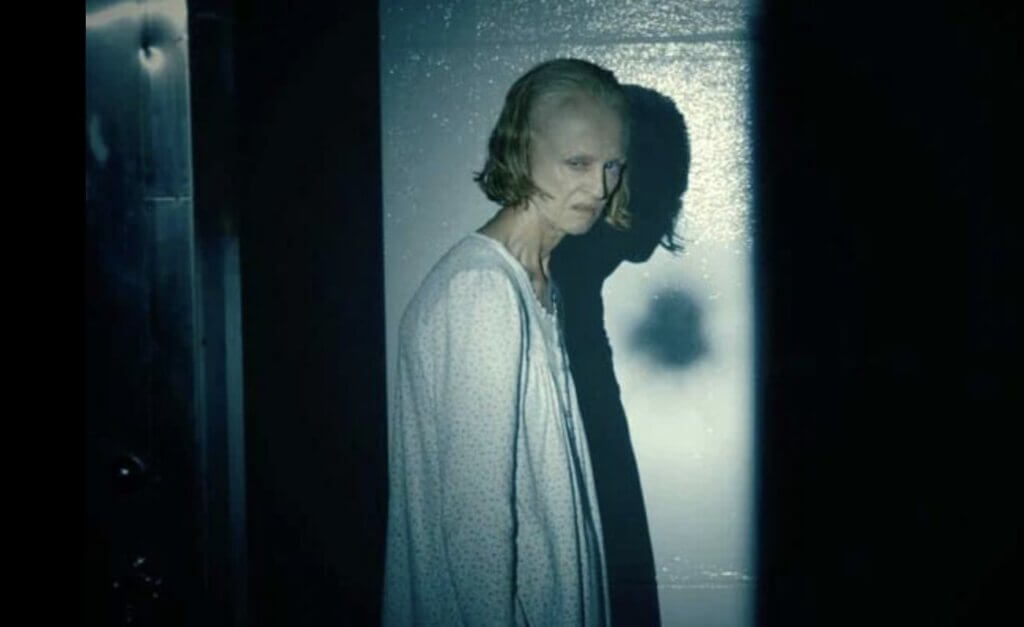
Jill Larson is the best reason to watch The Taking of Deborah Logan (2014). She makes Deborah convincing as a woman trying to hold on to control of her life, then frightening when a documentary crew captures behavior nobody can explain. For a while, the film’s Alzheimer’s premise gives its found-footage scares a human cost. Unfortunately, the supernatural plot eventually turns a promising story into a ridiculous mess.
Deborah Logan is fictional. The film is not based on a true story, although its documentary format is meant to make the footage feel plausible. Much like the “filmmakers” in The Tunnel (2011), the crew gets far more than it bargained for. Surprise, surprise. What makes this case more interesting is that the cameras are recording a woman who never wanted them in her house to begin with.
Stream, rent, or purchase The Taking of Deborah Logan on Amazon.
The film begins with a small documentary crew visiting the house of Deborah Logan (Jill Larson), an aging woman suffering from Alzheimer’s. Deborah doesn’t really want to be the subject of a documentary, but her daughter, Sarah (Anne Ramsay), convinces her to go along with it. We learn through whispered conversations that Deborah’s home is on the verge of getting repossessed. According to Sarah, the documentary will provide the funds needed for her mother to keep the house.
That arrangement bothered me more than the crew’s first encounter with anything supernatural. Sarah needs the money, but Deborah is the one whose illness and private life serve as material for a stranger’s film. The cameras make the family’s situation feel uncomfortably real before they become a convenient way to capture scares.
So, the crew of young documentary filmmakers sets up shop at the isolated house. Deborah has one close neighbor, Harris (Ryan Cutrona), who takes an interest in the documentary. Though like Deborah, he becomes increasingly opposed to the crew’s presence on the property. As the crew records Deborah’s day-to-day activities, they realize there’s more at play than a simple case of Alzheimer’s.
At first, Deborah Logan appears relatively well-balanced, with brief lapses in memory. However, the cameras pick up her nightly activities, which include sleep-walking around the house, apparating onto kitchen counters, and suddenly appearing in the crew members’ bedrooms. Though the crew is shaken by these events, they endeavor to continue their film.

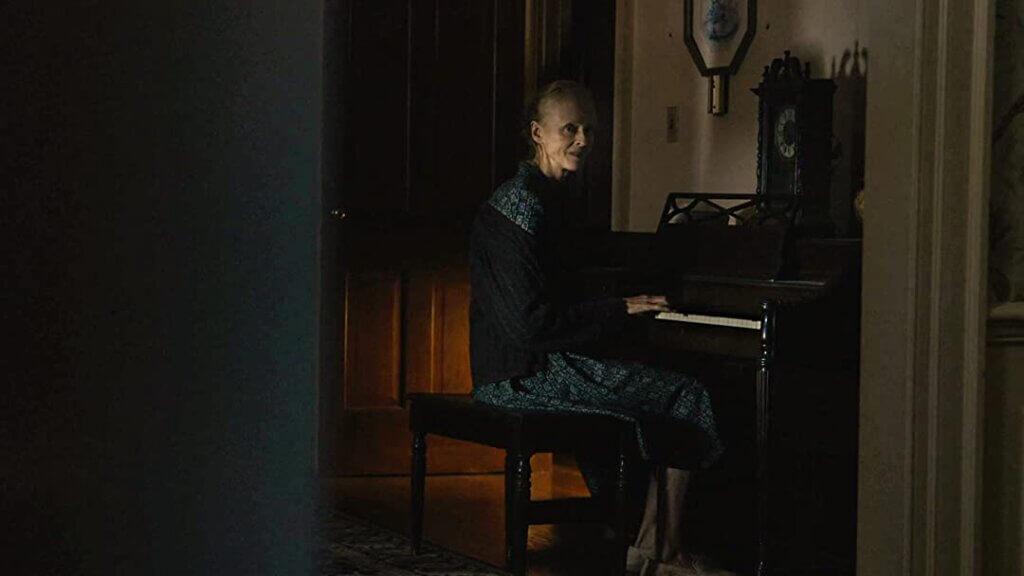
However, when Deborah turns violent, tensions rise among the family and crew. Doctors attempt to explain away the events, with little success. Eventually, the crew uncovers that something evil has taken over Deborah’s mind and body.
The Taking of Deborah Logan could have easily been called The Exorcism of Deborah Logan. It follows in the same footsteps as almost every exorcism film that came before it. We get brief glimpses of Deborah standing in pitch-black rooms, staring out of windows, and muttering to herself. We hear audio of her speaking in gibberish, demonic languages. Thus, The Taking of Deborah Logan doesn’t cover much new ground.
That said, Jill Larson was perfectly cast for the role of Deborah. In one scene, she seems like the little old lady next door. A few moments later, she’s a demon from your worst nightmares. Her entire performance is excellent, from start to finish. This makes the film’s shortcomings even more disappointing.
Director Adam Robitel said he wanted the film to begin like a medical documentary before developing into a possession story and then a monster movie. I can see the appeal of that progression. My problem is that Larson continues to make Deborah feel like a person while the screenplay becomes increasingly interested in what horrifying thing her body might do next.
Other than Jill Larson, the cast is questionable at best. Anne Ramsay plays Deborah’s daughter. While her character is poorly written, she does a decent job. Ryan Cutrona also works fine as the nosy neighbor. However, The Taking of Deborah Logan really falls flat with its younger cast.
Michelle Ang plays Mia, who serves as the frontwoman, so to speak, of the documentary film. She knows how to talk to a camera, but her performance doesn’t add anything of value. In fact, it’s downright bad at times. While the trailer shows most of the highlights, you can get a feel for the kind of “student acting” vibe the film crew gives off. Maybe they act badly because they’re supposed to be student filmmakers? Who knows.
Unfortunately, Michelle Ang is probably the most talented of the young cast. Brett Gentile overacts his way through the film, providing some truly nauseating one-liners. The third documentary crew member, played by Jeremy DeCarlos, hardly exists in the film. His performance left no impression whatsoever.


I know that it’s tough for indie horror films to get quality actors; It’s even tough for big studio productions. The horror genre has always been at odds with quality acting. That’s part of the reason that I can’t get into found-footage horror. The entire concept behind the subgenre is amplified realism. This realism theoretically pulls the viewer into the story, making them feel as if they’re watching real events. But how can I believe a story when the actors look and sound like they’re reading lines off of cue cards?
Setting aside some dreadful performances, there’s the question of using Alzheimer’s disease as the foundation for a possession film. The diagnosis gives the documentary a plausible reason to be in Deborah’s home, and Sarah’s exhaustion makes the early scenes feel more consequential than the usual found-footage setup. People with dementia may sometimes become agitated or aggressive, often for reasons like discomfort or difficulty communicating. The film’s supernatural events are something else entirely.
Robitel eventually makes that distinction clear, but I think he waits too long. For much of the film, the audience is invited to fear Deborah herself, while Larson keeps reminding us that a vulnerable person remains beneath the spectacle. The Babadook (2014) also combines family strain with a supernatural threat, yet its central relationship retains its force when the monster takes shape. Here, the more outrageous the possession becomes, the less interested the film seems in the mother and daughter who made its opening compelling.
In short, The Taking of Deborah Logan is not unwatchable, nor is it worthy of great praise. It is just another found-footage exorcism movie to throw on top of the pile. Jill Larson saves the film from falling into obscurity. Her performance actually helps make the film pretty scary at times. Too bad the young cast and filmmakers botched the rest of it.
The Taking of Deborah Logan (2014) Rating: ★★½ out of 5
If you’d like to watch The Taking of Deborah Logan (2014), the movie is currently available to stream, rent, or purchase via Amazon.