



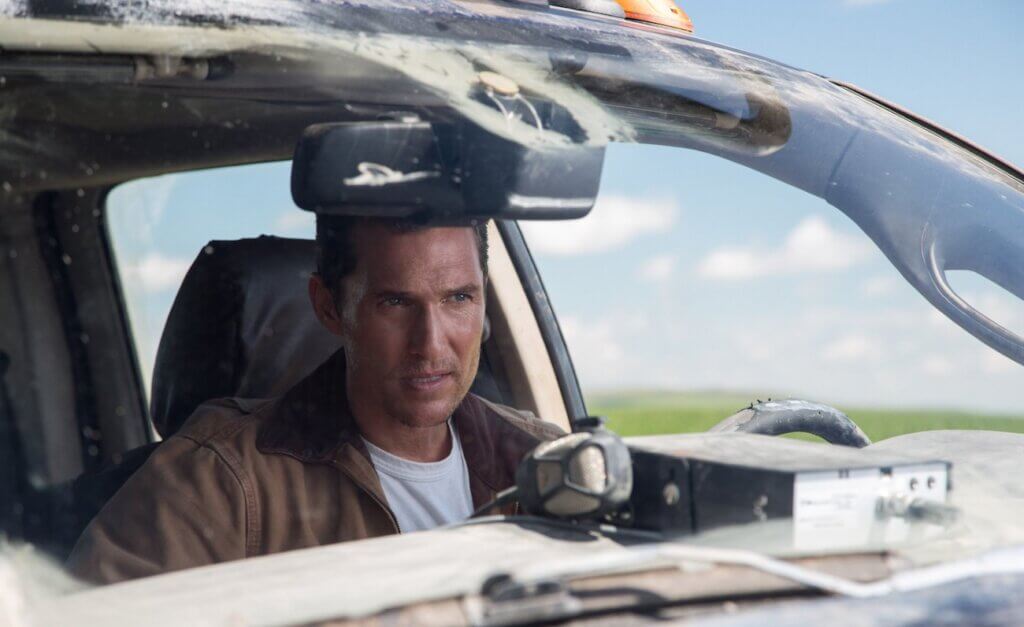
In Interstellar (2014), Cooper leaves his children in order to help save them. The apparent clarity of that sentence conceals the film’s central moral difficulty. He cannot protect Murph and Tom from a dying Earth by remaining a farmer indefinitely, but he also cannot remain their father in any ordinary sense while travelling through a wormhole. The mission offers a possible future for humanity at the price of years his children will have to live without him. At the end, Murph helps make that future possible, and Cooper returns to find her near death. The success of their work answers the question of whether the journey mattered. It does not settle whether a father was entitled to impose its costs on his children.
The film opens with a world that has lost confidence in its future. Blight destroys crops, dust drifts into the family home, and schools train children to adapt to contraction rather than imagine expansion. Cooper, a former pilot and engineer, farms because food has become a more urgent social need than exploration. Yet the apparent opposition between farming and flight is deceptive. Both are attempts to sustain life. The problem is that Cooper sees one as a temporary surrender of his capacities and the other as a calling. When the secret NASA project offers him a place on its expedition, a public duty coincides with a private longing. Matthew McConaughey described Cooper as someone who wants to save humankind but also wants a chance to live his dream (National Board of Review, 2014). Neither motive cancels the other. Their mixture makes the decision more ethically interesting than a straightforward act of self-sacrifice.
Cooper’s argument for leaving is formidable. Earth is becoming unable to support its population. NASA discovered a wormhole near Saturn, and previous explorers have sent data from candidate worlds. Professor Brand proposes two possible outcomes. Plan A would solve the problem of gravity and allow people already living on Earth to leave. Plan B would use stored embryos to begin a human population elsewhere if Earth’s population cannot be rescued. Cooper’s children are among the people threatened by the blight. If his piloting materially increases the chance of saving them and millions of others, then staying home is not obviously the more caring option. A child needs a livable world as well as a present parent.
This is where the film moves beyond the familiar choice between family and humanity. Political philosopher Anca Gheaus argues that duties concerning future generations can arise from duties owed to children who already exist. Children need adequate prospects, including a world in which they can lead their own lives and care for others in turn (Gheaus, 2016). Applied to Interstellar, this means Cooper’s responsibility to Murph and Tom has a temporal reach beyond their childhood. He should care about the air they will breathe as adults and the lives available to any children they may raise. The future of humanity is not a remote abstraction placed above his family, but also a condition of his children’s freedom.

Yet the same reasoning resists an easy acquittal. Gheaus’s argument begins with existing children rather than treating them merely as instruments for an imagined population. Murph and Tom are not interchangeable with the future beneficiaries of Plan B. The latter may someday live; the former already trust Cooper to care for them. A parent’s duties differ because dependency is personal. A stranger might contribute money or labor toward their welfare, but only Cooper can be the father whose departure Murph experiences as abandonment. A calculation of the greatest number helped may justify accepting grave costs. It cannot make those costs vanish, especially when they fall on people who cannot consent to the bargain.
Nolan gives the argument a stubborn physical object: the watch Cooper leaves Murph. It is a promise of shared time, even as he departs into a mission where his time and hers will no longer pass together. Murph refuses to say goodbye. Her anger is not evidence that she fails to understand the stakes, but rather acknowledgement that the stakes include her. Cooper believes he will return, but he has no dependable timetable. The practical question for a child is whether someone will be there for tomorrow’s ordinary needs, not whether an enormous project has a plausible chance of success. Donald, their grandfather, provides care at home, and Tom will assume responsibilities of his own. Still, arranging other caregivers does not fully discharge Cooper’s obligation to be honest about an absence whose length he cannot control.
The film’s treatment of time makes this moral gap visible. Near the black hole Gargantua, the crew descends to Miller’s planet knowing that gravity will produce an extreme difference between the time they experience and the time passing elsewhere. The landing goes disastrously wrong. When Cooper and Amelia Brand return to the ship, more than two decades have elapsed for Romilly and for everyone on Earth. Cooper then watches messages in which Tom grows up, forms a family, suffers loss, and begins to give up on a reply. Murph, now an adult, sends a message on the birthday when she has reached the age Cooper was when he left. She asks whether he knew he would leave her there to grow old without him.
Cooper’s tears during the recordings do not by themselves constitute an ethical defense. He feels the loss with an intensity the audience can share, but the children have lived it continuously. The scene refuses the comforting assumption that a heroic intention supplies the missing years. Relativity here is more than a scientific premise or an ingenious plot device. It exposes the uneven distribution of sacrifice. Cooper risks his life, while Murph and Tom bear an extended, ordinary uncertainty. He pays in danger and separation; they pay in upbringing, trust, and time. No universal clock can turn these into the same experience.

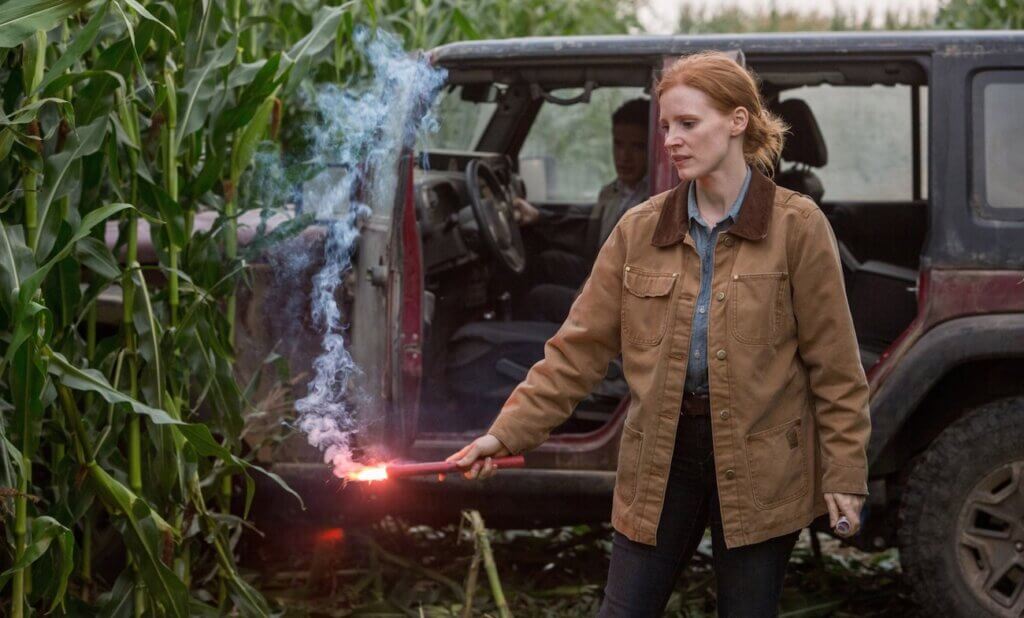
An ethic of care asks what attention a decision gives to the people made vulnerable by it. Cooper is intensely attentive to humanity’s possible extinction, yet he initially understands Murph’s protest chiefly as an obstacle to departure. She has evidence that her room’s supposed “ghost” may be sending a warning, and she interprets the pattern as “STAY.” Cooper does not know that the message comes from his future self. His refusal to stay might ultimately be necessary for the loop that saves humanity. At the moment of choice, however, he cannot know that. Treating the completed plot as a proof that every earlier decision was right confuses hindsight with justification. People act under uncertainty, and they owe those affected an account of the uncertainty.
Professor Brand’s concealment makes that problem acute. He presents Plan A as a real prospect, although he knows his gravity equation cannot be completed with the information available to him. He sent others into danger while concealing that the mission may only preserve the species through Plan B. This matters to Cooper in a way that a general appeal to survival cannot undo. He is not simply choosing between a secure Earth and a risky voyage. He accepts the voyage partly because it might bring his own children off Earth. The professor withholds information central to that decision. His lie is defended by the urgency of extinction, but the film shows how readily the language of humanity can authorize deception of actual human beings.
There is a moral distinction between preserving a possibility of future life and rescuing people who presently exist. Plan B could be worth pursuing in the catastrophe the film depicts. It is still not equivalent to Plan A for Murph, Tom, or the other people waiting on Earth. Professor Brand’s claim to superior knowledge lets him decide which lives to count while asking others to trust a story he knows is false. The mission’s noble aim does not grant him unlimited authority over the choices of those who must carry it out. If a sacrifice is to be morally meaningful, the person asked to make it needs to know what is being sacrificed and for whom.
Dr. Mann develops the same problem from another direction. His reports falsely identify his planet as viable, summoning rescuers because he cannot face dying alone. Mann speaks in the elevated language of human survival while acting to secure his own. The contrast with Cooper is real: Cooper repeatedly takes risks for other people. Yet Mann is not simply an alien kind of villain inserted to make Cooper look good. Both men understand what it means to be cut off from loved ones; both face choices that may kill others. Mann’s collapse warns against assuming that an expert’s role or a survivalist slogan guarantees trustworthy judgment. It also tests whether the mission can sustain its ethical commitments when its participants are afraid.

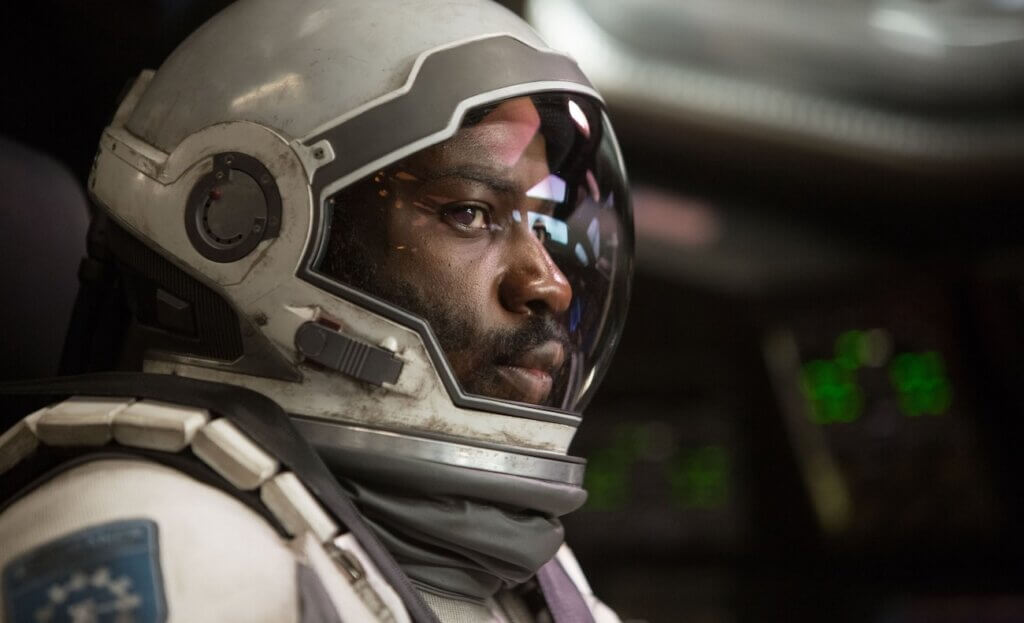
Amelia Brand offers a different, controversial way to think about what guides judgment. She argues that love might matter even where it appears to have no instrumental value, and she wants to investigate Edmunds’ planet, where the man she loves went years earlier. Cooper objects that her attachment may be bias. He has a point. Affection is no substitute for evidence about a planet’s habitability. But he is not a disinterested observer either: his urgency to return to Earth shapes his preferences. The film does not need us to accept Amelia’s speech as a scientific theory. Christopher Nolan has said that he deliberately wrote the speech about love and considered it essential to the film’s emotional argument (Time Out, 2014). Love can direct attention toward a person who might otherwise be lost in a calculation. It can also distort a decision when the person making it refuses to examine that influence.
The useful question, then, is not whether love competes with reason as a mysterious force. It is what love helps the characters notice and what it tempts them to overlook. Amelia’s bond with Edmunds leads her toward the world that ultimately appears capable of sustaining life, although that outcome does not prove her reasoning was sound at the time. Cooper’s love for Murph later helps him understand where and to whom the data must be sent. Yet his love did not spare her from his departure. An emotion can motivate care without providing a blanket permission for everything done in its name. The film becomes most persuasive when it treats love as a demand to remain answerable to another person, even across an almost unimaginable distance.
The tesseract gives this demand a strange visual form. Cooper falls into Gargantua and enters a constructed space from which moments in Murph’s childhood bedroom are accessible. He first tries to prevent his earlier self from leaving. This is a crucial admission built into the ending: given a view of what Murph will suffer, Cooper wishes to undo his choice. He cannot. The “STAY” message is his own, and its failure is already part of their history. The science-fiction mechanism permits communication with the past, but it does not permit the parent to take back an absence that his child has already endured.
Cooper then changes his aim. With data collected by TARS inside the black hole, he uses gravity to encode the information in the second hand of Murph’s watch. The gesture returns to an object associated with the promise he could not keep. But the watch is not a magical token that saves Earth because paternal love transcends physics. It carries information, and Murph recognizes, reads, and applies it. Her scientific competence completes the work Professor Brand could not. The solution belongs to their collaboration across time, and especially to the grown woman who has spent years pursuing a problem while living with her father’s absence. To say that Cooper saves humanity without naming Murph’s intellectual labor would repeat the film’s own temptation to center the explorer over those who stayed behind.

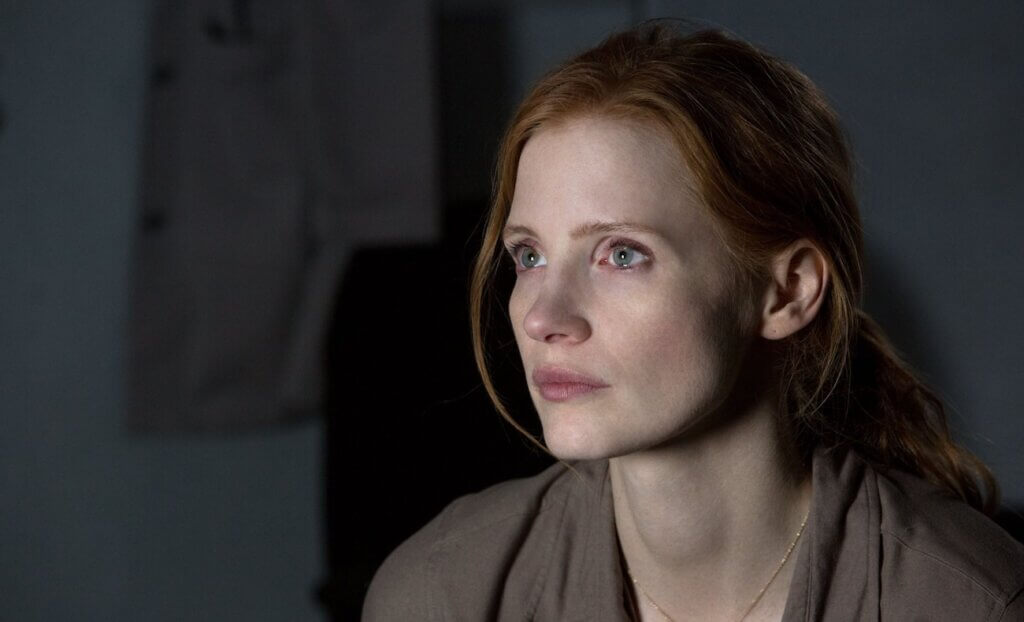
Murph’s anger has also been productive in a less comfortable way. She challenges the professor she once trusted, continues working on the equation, returns to the farmhouse, and revisits what she thought she knew about the bedroom. The story risks suggesting that her suffering was necessary because it eventually made her determined enough to solve the problem. That would be a dangerous lesson. A child’s endurance can be admirable without making the injury that called it forth good. Her achievement demonstrates that she is a moral agent with projects beyond Cooper’s intentions. It does not retroactively give him the right to choose her pain for her.
Tom’s place in the story sharpens this point. He stays on the farm, raises a family, and resists leaving even as dust and illness threaten them. His attachment to the land can seem stubborn beside Murph’s scientific work. Yet he has lived through the same paternal departure and inherited a different kind of responsibility. The film grants less space to his inner life, which makes it easier to read the farm merely as something enlightened characters must escape. Its account of survival is stronger when Tom is recognized as a person bearing the costs of environmental decline in the present, not simply as an obstacle to Murph’s plans. Even a successful evacuation comes too late for some losses within his family.
Hans Jonas’s ethics of responsibility can be applied here. Writing about the scale of modern technological power, Jonas argues that present action must take the vulnerability of posterity and the environment seriously. He places the parent-child relation near the center of his account of responsibility (Jonas, 1984). In Interstellar, that relation and the future of the species are pressed together: Cooper leaves his children to help secure a future in which they might live. But Jonas’s concern also complicates the film’s imagery of escape. Humanity cannot assume that technical ingenuity will absolve it of its obligations to the world it has damaged. The orbital station proves that humans can survive; it does not make the dust, the deaths or the loss of Earth ethically insignificant.
The ending stages reconciliation with unusual brevity. Cooper reaches a station named for Murph, who is now old and surrounded by descendants. Their reunion is moving precisely because it is inadequate to the time lost. She no longer needs him to raise her, and she tells him to go to Amelia Brand rather than stay to watch her die. This is Murph’s decision, not the child’s consent granted decades too late. Cooper can act on it because she has made a life and can speak for herself. The scene refuses to restore the family to its original arrangement. Father and daughter meet as people who did something extraordinary together and who cannot recover the ordinary life they missed.
Was Cooper right to leave? Given the danger on Earth and his unusual ability to pilot the mission, the decision can be defended. That doesn’t change the moral cost. His mixed motives, the uncertain duration of the journey, and Professor Brand’s deception prevent a clean account in which necessity makes every consequence acceptable. The film’s most demanding insight is that love and responsibility extend in two directions at once: toward particular people who depend on us now, and toward a future in which they can continue to live. Cooper’s journey becomes worth taking because Murph can make use of what he sends. Her accomplishment makes the rescue possible, while her years without him remain real. Interstellar ends with humanity moving outward, but its ethical center is the daughter who stayed, grew older, and answered back.
Sources
- Gheaus, Anca. “The Right to Parent and Duties Concerning Future Generations.” The Journal of Political Philosophy, 2016. Full text.
- Jonas, Hans. The Imperative of Responsibility: In Search of an Ethics for the Technological Age. University of Chicago Press, 1984. Publisher page.
- “Interstellar — Q&A with Jessica Chastain, Anne Hathaway, Matthew McConaughey, and Christopher Nolan.” National Board of Review, Nov. 7, 2014. Interview.
- “Christopher Nolan Interview: ‘Another Superhero Movie? Unlikely. But Never Say Never.’” Time Out, Oct. 28, 2014. Interview.